21/10/2026 10:37
Who Signed the Repair Advice? Telegram Channel Signatures for Cambodian Furniture Workshops

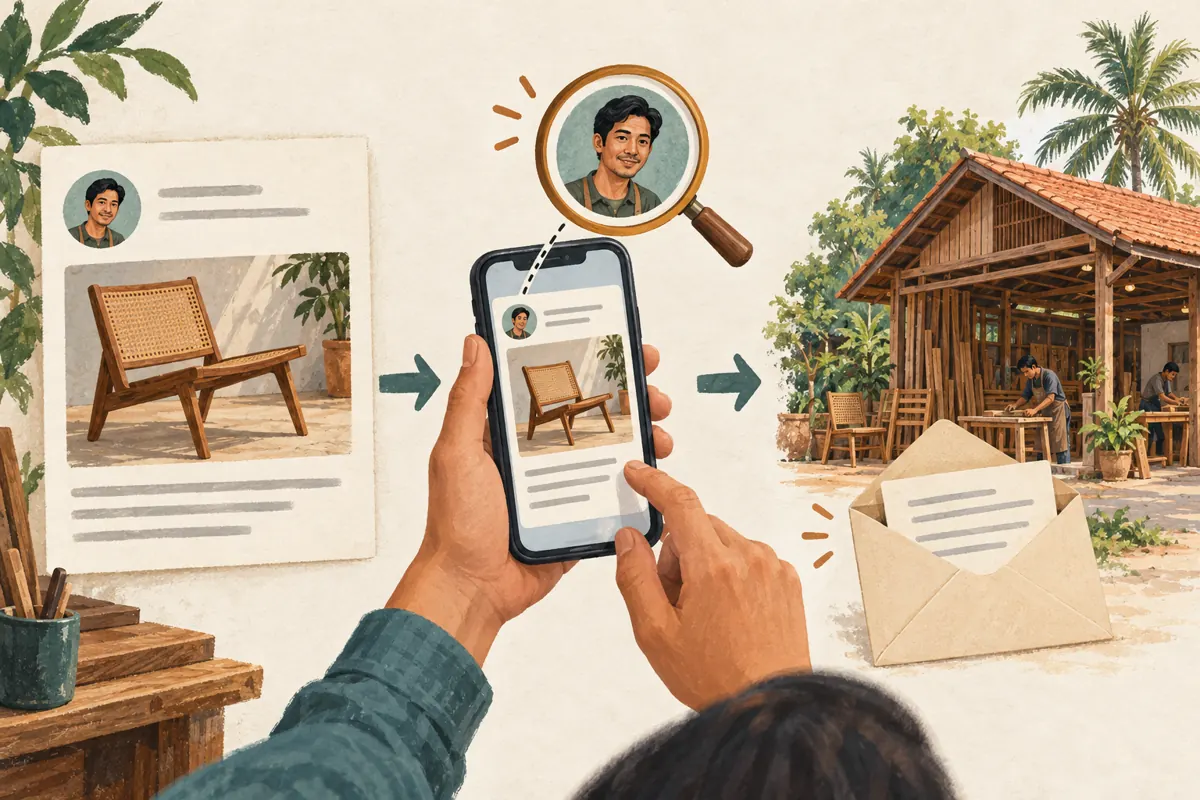
A furniture-restoration channel can contain several voices: a craftsperson explaining a loose chair joint, a coordinator announcing collection arrangements, and an owner describing available work. When every update appears under the same shop identity, readers may misunderstand who supplied the advice or where to ask for a quotation. Telegram offers different ways to identify channel authors, but choosing a setting is only part of the job. This guide explains how a Cambodian workshop can make attribution useful, respect staff preferences and test the customer journey before promoting its channel. The workshop situations below are hypothetical examples, not customer results.
1. Identify the confusion you need to solve
Start with a specific reader question: does this person need to know who wrote the post, who checked its technical content, or who handles the booking? Those are different responsibilities. A signature can identify a publishing account, but the caption must still explain whether the post offers general guidance, describes an inspected item or announces a business arrangement. Adding a name cannot repair an ambiguous promise.
Consider a hypothetical Phnom Penh workshop sharing a chair-restoration demonstration. The restorer discusses the joint, while the coordinator posts the video and answers collection questions. A reader might interpret the coordinator’s signature as technical authorship. Before changing any settings, write a short internal rule explaining how technical contributions will be credited and which contact handles enquiries. Use the actual roles in your shop rather than impressive titles that exaggerate someone’s responsibility.
2. Understand the three attribution choices
Telegram’s official channel documentation distinguishes default channel attribution, a non-linked text signature and a mode displaying sender profiles. Ordinary channel posts generally display the channel identity. A plain signature adds the posting administrator’s chosen display name without linking to that person’s profile. When signatures and author profiles are enabled together, administrators can select an available identity to publish as, including their own profile or a channel they control.
Treat these as presentation choices. Channel attribution suits shared announcements. A plain signature can distinguish contributors without making the signature a profile link. Profile-linked authorship may suit a craftsperson who intentionally maintains a public professional presence. None of these modes independently verifies qualifications, proves that the named person inspected an item or establishes that an offer remains available. The official sources listed below explain the platform behavior; the operating rules in this article are editorial recommendations.
3. Choose the least complicated useful arrangement
For a small workshop where one coordinator handles every enquiry, keeping the channel identity may be sufficient. The caption can explain who contributed the technical explanation without changing the public sender. If several people regularly write their own material, plain signatures may help readers distinguish them. Consider linked profiles only when readers benefit from reaching or learning about the individual and that person accepts the public association.
Make the decision by post purpose. A collection notice speaks for the business, even when one employee uploads it. A personal account of a restoration technique may reasonably carry an individual identity. A quotation still needs its scope, validity and enquiry instructions in the message itself. Avoid changing identity simply to make a modest announcement appear more authoritative. Consistent attribution should help readers understand responsibility, not create an impression of expertise unsupported by the content.
4. Agree on names and profile visibility with staff
Discuss the proposed public identity with each contributor before enabling linked authorship. Review the display name, profile picture and information visible to an ordinary reader. A personal account may have been created for family conversations rather than business enquiries. Do not assume that a colleague who agrees to appear in a workshop video also agrees to have their account associated with public posts.
For Cambodian readers, choose names and role descriptions that the intended audience can understand. A workshop publishing mainly in Khmer can explain a contributor’s role in Khmer within its captions while retaining the person’s genuine preferred name. Agree on one spelling where transliteration is necessary. Avoid decorative job titles, inconsistent nicknames and changes made solely for a campaign. If the publishing account belongs to the coordinator, explicitly credit the technical contributor in the caption rather than implying that the automatic signature identifies the inspector.

5. Configure the channel and run a controlled test
Telegram’s Super Channels announcement gives the route Channel Settings, then Administrators, with Sign Messages and Show Authors’ Profiles enabled for profile-based posting. It also explains that administrators can select the posting identity through the profile picture in the message bar. Check the controls available in your current app before proceeding; wording and placement may differ. For plain attribution, review the signature option separately instead of automatically enabling profile display.
Use a private test channel with consenting colleagues to examine the chosen arrangement before applying it to a busy public channel. Publish harmless sample content, then have a colleague view it as a subscriber. Check the displayed identity and what happens when it is tapped. Repeat with every account that will publish. After applying the arrangement to the real channel, inspect a new ordinary post from a reader’s perspective rather than assuming the administrator’s composing screen shows the complete customer experience.
6. Keep technical approval separate from the signature
Create a simple approval note for each demonstration: the item shown, the person who checked the explanation, the person publishing and the approved customer action. This can be a brief record in your existing editorial process. Its purpose is to catch mismatches before publication. A familiar signature should never become an excuse to skip checking whether the photograph, diagnosis and caption describe the same chair.
In a hypothetical example, the restorer approves this meaning: the demonstrated chair has a loose joint, and the workshop must examine other chairs before proposing work. The coordinator then removes a draft sentence suggesting that every wobbling chair needs the same treatment. The final caption credits the restorer’s explanation and directs assessment enquiries to the business contact. That distinction gives readers useful context while avoiding an unsupported universal repair claim. It also makes later questions easier for the team to route.
7. Give readers one clear enquiry destination
An author’s identity and the booking destination do not have to be the same. State where customers should send assessment requests, even when the author profile is visible. Explain what the first message should contain: for example, a photograph of the whole item, a closer view of the affected area and the customer’s general district. Request detailed collection information privately when it becomes necessary.
For a hypothetical workshop serving Phnom Penh and nearby areas, the caption could explain that collection availability depends on location and must be confirmed. Do not let the restorer’s name imply that they personally arrange transport or accept bookings. Check that the named business contact is monitored during the advertised response period. If the contributor receives an enquiry directly, use an agreed handoff that tells the customer where the conversation should continue, without forwarding private information unnecessarily.

8. Review SMM services only after the reader journey works
An SMM panel cannot configure your attribution policy or establish whether customers understand it. The supplied top-smm.com catalogue includes the exact listing “Telegram Channel/Group Members ~ Max 1M ~ 100k/days ~ Instant ~ 𝐍𝐎 𝗥𝗘𝗙𝗜𝗟𝗟”. Its title identifies a channel/group member offering, but the supplied description is empty. Treat the remaining wording as catalogue claims requiring clarification, not independently verified delivery terms or a recommendation.
Nothing in that listing establishes Cambodian audience origin, genuine interest, furniture-repair demand or official Telegram affiliation. Purchased engagement is not evidence of sales, advertising delivery or customer trust. Before considering any service, check its current terms and applicable platform rules, and ask whether it serves a defensible business purpose. If the immediate problem is unclear authorship or unanswered enquiries, resolve that problem first. Do not buy a larger visible count to imply that local customers endorse the workshop or its technical advice.
9. Check understanding with questions, not popularity
Ask a consenting colleague who did not prepare the post to read it on a phone. Without explaining your intention, ask who supplied the repair explanation, whether the advice applies to their own furniture and where they would request an assessment. If their answers differ from the intended meaning, revise the caption or attribution. This small comprehension check is more relevant to the workflow than whether the post looks busy.
After promotion, record actual questions that reveal confusion. Repeated messages to an off-duty craftsperson may indicate that the enquiry destination needs greater emphasis. Requests assuming an automatic repair price may indicate that the caption lacks an assessment condition. Keep these observations separate from member counts and any panel delivery records. A genuine enquiry is still not a confirmed booking; record the later agreement separately. Avoid claiming that signatures caused an improvement unless your evidence can support that conclusion.
10. Prevent common mistakes and plan for changes
Common mistakes include enabling linked profiles without discussing visibility, leaving an unintended posting identity selected, crediting the uploader as the technical reviewer and expecting a signature to explain booking conditions. Another mistake is using different public names so frequently that returning readers cannot recognize the contributor. Make identity selection part of the final content check alongside the photograph, wording and enquiry destination.
Review the arrangement when a contributor changes responsibilities or leaves. Update future publishing practices and inspect prominent older posts that may still direct readers to that person. Do not assume that changing a setting rewrites every historical attribution or removes copies already shared elsewhere. If an old message could misdirect customers, add a clear current instruction where readers are likely to encounter it. Keep the explanation factual and focused on how customers can obtain help now, without disclosing private staffing details.
Frequently asked questions
Does a plain Telegram signature link to the administrator’s profile?
Telegram documents plain signatures as non-linked text. Profile-linked authorship is a separate mode involving author-profile display. Test your chosen configuration from a subscriber account before using it publicly, especially if avoiding a profile link is an important staff preference.
Can the coordinator publish advice supplied by a restorer?
Yes, with accurate attribution and approval. The caption should identify the contributor’s actual role, while the internal record identifies who checked the technical explanation. Do not assume the automatic sender label communicates both responsibilities. Keep booking instructions explicit so readers know which contact handles their assessment request.
Should a one-person Cambodian workshop enable signatures?
Only if they help readers. A recognizable channel identity and clear captions may already provide enough context. Linked authorship can be useful when the owner intentionally maintains a public professional profile, but it also requires a decision about handling enquiries that arrive through that identity.
Will signatures or purchased members make customers trust repair advice?
Neither establishes technical accuracy or customer trust. Useful photographs, appropriately limited explanations, truthful attribution and reliable replies give readers information they can evaluate. Purchased members do not demonstrate Cambodian demand or endorsement. Judge the communication by whether readers understand the advice and can reach the correct business contact.
What should we do if a post appears under the wrong identity?
Pause further promotion and inspect what readers actually see. Correct the content or issue a clear clarification as appropriate using the controls available to you. Verify the result from a subscriber account, then check the posting identity before the next message. If the mistake exposed an unwanted profile association, inform the affected colleague.
Explore the current service catalogue, create an account, or ask a specific question through support tickets.
- Telegram: Super Channels, Star Reactions and Subscriptions
- Telegram API: Channels, supergroups, gigagroups and basic groups
- Telegram: Channels 2.0 and More — Admin Signatures
Prepared with AI assistance. Illustrations explain the workflow and do not represent customer results.