19/10/2026 07:55
Should Customers Remix Your Sewing Demo? TikTok Reuse Controls for Cambodian Tailoring Shops

A tailoring demonstration can start a useful conversation when viewers show their own sleeve, ask about a cuff, or explain a different technique. Customer fitting footage needs more careful treatment: someone agreeing to appear on your shop’s page may not expect their image to become part of another person’s video. For Cambodian businesses promoting their work on TikTok, deciding whether to permit reuse is therefore an editorial choice. This guide explains how to choose suitable footage, configure the relevant controls, invite meaningful responses, and evaluate an SMM panel listing without confusing purchased engagement with genuine participation.
1. Give reuse a specific job
Start by finishing this sentence: “A viewer’s response would help us understand…” A useful answer might be which cuff detail shoppers find confusing or which part of an alteration they want explained. “Make the post look popular” gives the team no useful standard for deciding what to film, whom to invite, or how to respond. A clear purpose also helps you recognise when an ordinary question in the comments would work just as well.
Consider a hypothetical Phnom Penh tailoring shop preparing a demonstration about sleeve finishes. The owner wants viewers to identify the detail they would like explained next. A close view of a sample garment serves that purpose. Footage of a customer discussing a personal fitting concern adds little and creates unnecessary complications. Write the intended response beside the filming plan so the person recording, the editor, and the colleague answering questions share the same objective.
2. Choose between a side-by-side response and an excerpt
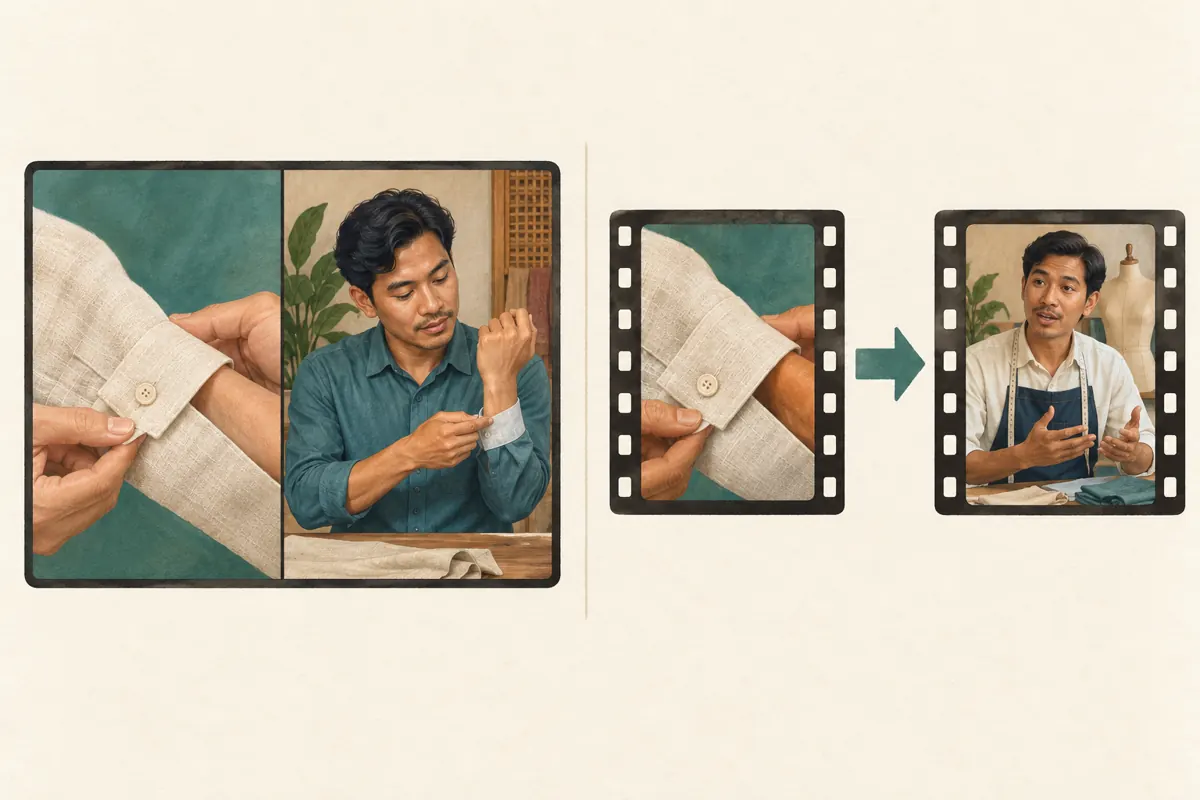
TikTok describes Duet as two videos playing together in a split screen. Stitch lets someone use part of another video within their own creation. These formats support different explanations. A Duet could show a viewer pointing to their own cuff alongside your demonstration. A Stitch could begin with your question and continue with their explanation. Neither format establishes that the person responding is a customer or that they endorse your business.
For the hypothetical shop, a side-by-side comparison makes sense when the visible position of a sleeve matters. An excerpt followed by an explanation works better when the viewer needs time to describe a question. Keep the invitation focused on that distinction. Ask people to show a garment detail they are comfortable sharing, without names, measurements, receipts, or order information. Provide a comment-based alternative so participating does not require someone to record themselves.
3. Sort footage before touching the settings
Review the proposed clip according to what it contains. A shop-owned sample on a mannequin is usually easier to prepare for reuse than an identifiable customer fitting. A staff demonstration still needs agreement about how the footage will be used. Mixed footage deserves particular attention: a harmless cuff close-up may have a mirror reflection, a spoken customer name, or an appointment book visible behind it.
Ask anyone appearing whether they understand the proposed reuse invitation, rather than relying on a general agreement to be filmed. Keep a short internal note of the agreed context and any limits. If the answer is unclear, remake the demonstration using a sample garment. This is often simpler than trying to hide several identifying details during editing. Avoid making a customer feel that agreeing to promotional footage is part of receiving normal tailoring service.
4. Make the demonstration understandable when separated from the full post
A reusable clip should carry its essential explanation in the footage itself. Show the garment detail clearly, name what you are demonstrating, and keep any important qualification near that demonstration. If the technique applies only to the sample being shown, say so while it is visible. A qualification placed only at the end may disappear when someone selects an earlier excerpt.
In the hypothetical sleeve video, the tailor could explain that the sample shows one cuff construction and invite questions about other constructions. Avoid suggesting that every sleeve can be altered identically. Film against a quiet background with the camera close enough to reveal the detail. Use spoken Khmer when that suits the intended viewers, and check any captions against the actual explanation. Keep unrelated prices and temporary offers out of the reusable segment; they can become misleading when the excerpt circulates later.
5. Check account permissions and the individual post
TikTok’s Duet privacy guidance directs users to Profile, Menu, Settings and privacy, Privacy, then Reuse of content. Under Allow reuse of content from, the documented choices include Everyone and Friends, meaning followers you follow back. A public account is required to allow others to Duet. Review the choices actually available to your account instead of assuming that another shop’s settings will match yours.
For an individual published video, open More options, then Privacy settings, and review Allow reuse of content. Before publishing, the control is available through More options on the post screen. TikTok explains that this shared setting also affects Stitch, stickers, and adding the post to Stories. Record the chosen setting alongside the clip’s purpose. Have the publishing colleague check it on the specific post, especially when moving between a reusable sample demonstration and footage that should have reuse disabled.
6. Treat downloads as a separate decision
TikTok documents download controls under Settings and privacy, Privacy, then Downloads. Turning downloads off prevents downloads through that setting for existing and future posts, but previously downloaded copies remain on other people’s devices. People can also still share content through links. Download controls therefore do not provide a way to recall every copy of a video.
Decide whether saving the clip serves a useful customer need. A general garment-care demonstration might be intended for repeated reference, while a personal fitting video has a different purpose. Review downloads and reuse separately, and write down the reason for each choice. The practical safeguard remains careful footage selection: keep customer records, private conversations, and identifying details out of public demonstrations. A switch cannot compensate for including material that the business never intended strangers to keep or circulate.
7. Run a small, clearly explained participation trial
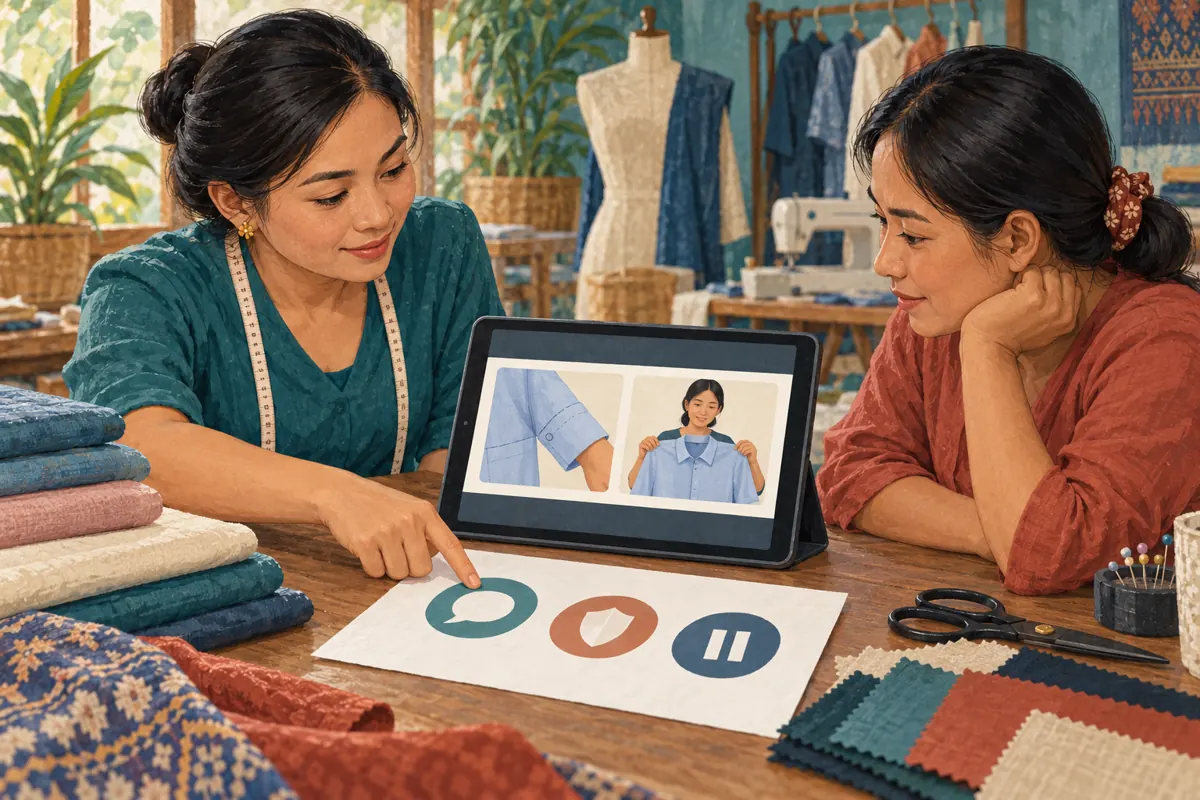
Begin with one demonstration that the team can comfortably monitor. Give viewers a concrete prompt, such as asking which visible cuff feature they want explained next. Avoid asking for exaggerated reactions or scripted praise. The invitation should make sense even if only one person responds, because that response may reveal a useful question for a future demonstration.
Assign a colleague to review responses during a realistic working period. Prepare a straightforward acknowledgement and a route for private order discussions. If a viewer includes personal information, avoid repeating it in a public reply. For commercial posts, also follow TikTok’s requirement to use the content disclosure setting when promoting a business. Keep that publishing check separate from the reuse decision. Allowing a response format does not complete the other checks needed for a promotional post.

8. Respond according to the issue, and read removal warnings
When a reused clip appears, watch the whole response before acting. Separate an ordinary question, a reasonable disagreement, a misleading interpretation, and a privacy concern. A viewer showing a different sleeve construction may simply need clarification. Explain the difference without presenting them as a satisfied customer or treating disagreement as misconduct. Save only the reference and context your team needs to handle the issue.
TikTok’s Stitch privacy guidance warns that Remove all posts in reuse history permanently removes the original post and associated Duet and Stitch videos. Treat that as a consequential action, rather than routine tidying. Disabling future reuse and deleting associated posts are different decisions. Read the confirmation carefully, preserve an appropriate copy of your original if needed, and consider the effects on existing links. For an individual post that violates privacy or platform rules, use the relevant reporting route.
9. Keep SMM catalogue labels separate from the participation plan
An SMM panel listing does not solve a weak reuse invitation. The supplied catalogue includes “TikTok Followers ~ [100% Real Users] ~ Max 1M ~ 20k/days ~ Instant ~ 𝐍𝐎 𝗥𝗘𝗙𝗜𝗟𝗟”. That is a public service title, not independent evidence for its embedded claims. The supplied listing has no explanatory description. Its follower label does not establish a service for thoughtful Duets, relevant sewing questions, or participation by Cambodian shoppers.
TikTok’s published guidance prohibits services that artificially increase engagement. A catalogue entry does not override those rules or imply official affiliation. Purchased engagement is not evidence of genuine interest, sales, ad delivery, or Cambodian users. For this workflow, put effort into a clear demonstration and voluntary participation. If someone proposes panel spending, ask which actual business problem it would address and what evidence supports that connection. When the problem is unclear footage or an unsuitable invitation, revise the content.
10. Review the conversation before repeating the format
After the trial, examine the substance of the responses. Did viewers understand the invitation? Did their questions reveal a detail worth filming more closely? Could staff answer without collecting personal measurements publicly? Keep examples of useful questions and note any recurring misunderstanding. These observations can guide the next demonstration without claiming that every response represents buying intent.
Choose a concrete next step: repeat the format with another sample, rewrite the invitation, create a closer demonstration, or use ordinary comments instead. Common mistakes include opening reuse on every post by habit, promising universal tailoring results, and calling every response a recommendation. Another mistake is continuing an invitation when nobody has time to answer it. Assign the next review to a named colleague and connect it to the shop’s actual capacity to respond.
Frequently asked questions
Should every tailoring video allow Duets and Stitches?
No. Decide according to the clip’s purpose and contents. A sample-garment demonstration with a clear invitation may be suitable. A fitting involving a customer’s face, voice, or personal concern deserves a different decision. If reuse adds no useful way to ask or explain something, an ordinary post with a clear contact route may serve the shop better.
Does disabling downloads stop all sharing?
No. TikTok says people can still share content through links, and copies downloaded while the setting was enabled remain on their devices. Do not describe a public demonstration as impossible to copy. Choose footage that is appropriate for public circulation, then use the available controls to support your intended distribution.
Can we treat a friendly Duet as a customer testimonial?
A friendly response does not establish a purchase or an endorsement. Describe what the person actually did, such as asking a question or showing a garment detail. Before using their response in separate promotional material, clarify the proposed use with them. Avoid adding claims about satisfaction, results, or a customer relationship that the response does not support.
What if nobody responds to the invitation?
Check whether the task is easy to understand and comfortable to perform. Asking people to film themselves may be more effort than the question warrants. Offer a comment alternative, simplify the prompt, or demonstrate the detail more clearly. Silence does not establish that the shop needs purchased followers, and a panel order cannot explain why viewers chose not to respond.
What should we record if we change the reuse decision?
Keep the post reference, the setting changed, the date, and a short practical reason. For example, note that the invitation was paused because staff could no longer review responses. If removal is being considered, record who reviewed the warning and the effect on the original post. Keep customer details out of routine team notes.
Explore the current service catalogue, create an account, or ask a specific question through support tickets.
- TikTok Help Center: Duets
- TikTok Help Center: Stitch
- TikTok Help Center: Duet privacy settings
- TikTok Help Center: Stitch privacy settings
- TikTok Help Center: Manage video downloads
- TikTok Community Guidelines: Commercial disclosure and fake engagement
- TikTok Newsroom: How TikTok counters deceptive behaviour
Prepared with AI assistance. Illustrations explain the workflow and do not represent customer results.