22/10/2026 04:34
Moving Van or Meeting Point? Telegram Live Location for Cambodian Bicycle-Repair Pickups

A bicycle-repair promotion can explain the workshop’s services perfectly and still leave a customer waiting at the wrong entrance. Collection adds a practical question: does the map show where the customer should wait, or where the collection van is currently travelling? Cambodian workshops promoting pickup services through Telegram need to make that distinction before encouraging more enquiries. Live location can help during an agreed collection, but it does not confirm a booking, identify the correct bicycle or promise an arrival time. This guide follows a hypothetical Phnom Penh workshop from its public offer to the final handover, with a separate decision process for any SMM panel service under consideration.
1. Define the collection offer before showing a map
Start with the service customers can actually request. State the collection area, operating days, how pickup charges are confirmed and whether the bicycle goes to the workshop for assessment. Explain whether customers must remain available at the meeting point. A moving vehicle marker cannot answer these questions, and an attractive promotion should not leave readers to infer them.
In this hypothetical example, a Phnom Penh workshop collects bicycles by arrangement and sends a repair quotation after inspection. Its promotional message asks customers to send a bicycle photo, describe the problem and name their neighbourhood. Staff confirm collection separately. The offer avoids implying that a van passing nearby means immediate service is available. This gives the conversation a useful starting point before anyone exchanges precise coordinates.
2. Choose between a fixed pin and live location
Use a fixed location when the question is where to meet: a workshop entrance, an agreed collection point or a suitable place to load the bicycle. Use live location when the question is where the travelling person is now. Telegram documents live sharing through the attachment menu and allows the sender to stop sharing. Its original feature explanation distinguishes this from repeatedly sending static locations. [Telegram’s live-location guide](https://telegram.org/blog/live-locations).
For the hypothetical pickup, the customer’s agreed entrance remains the destination while the van approaches it. Send a short explanation alongside each map so the two roles remain clear. A practical message might say, “Please wait at the agreed entrance. The moving location shows our collection worker’s phone.” If nobody is travelling, a fixed pin and a clear landmark description will usually answer the question without continuous sharing.
3. Keep public promotion separate from pickup coordination
A public post should explain the collection offer and the next step. It generally does not need a customer’s entrance, a worker’s current movements or the sequence of household visits. Move those details into the conversation used to arrange the individual collection. This also prevents unrelated enquiries from interrupting a customer who is already waiting.
A Telegram username link can provide a contact route without requiring the shop to publish its telephone number. Telegram notes that usernames are public and allow people to find and message an account. Test the destination before adding it to a promotion. [Telegram’s username and link FAQ](https://telegram.org/faq#usernames-and-t-me).
Assign someone to answer that account during collection hours. A working link is only the entrance to the workflow; the customer still needs a reply confirming whether the requested area and collection window are feasible.
4. Confirm the bicycle and meeting point first
Before dispatch, gather enough information to recognise the job: bicycle type, visible problem, whether it can be rolled, the agreed entrance and who will hand it over. Ask about access constraints that affect collection, such as stairs or an entrance too narrow for the van. Keep questions relevant to the service rather than collecting unnecessary personal information.
Then send one compact confirmation. In a hypothetical message: “Collection is agreed for the discussed afternoon window. Please bring the blue bicycle to the courtyard entrance. We will message when the worker is ready to approach. Repair work requires a separate quotation.” Ask the customer to correct any misunderstanding before departure. This written agreement provides context when the location appears later; the map itself should never carry the entire booking.

5. Start sharing from the device that is travelling
Telegram’s instructions place live sharing under the attachment menu: choose Location, then the live-location option. The app also supports extending a share and sharing indefinitely until it is switched off. For a single collection, choose a limited duration appropriate to the agreed journey instead of leaving indefinite sharing as the routine choice. [Telegram’s updated location-sharing explanation](https://telegram.org/blog/my-profile-and-15-more#share-location-indefinitely).
Check which phone is sending the position. A dispatcher remaining at the workshop cannot represent the van’s movement by sharing that phone’s location. Have the travelling worker start the share while safely parked, in the intended customer conversation. If a separate worker account is involved, introduce it through the established booking conversation before asking the customer to rely on its messages.
Run a staff test before using the process with customers. Confirm that the receiving phone sees the intended location and that the sender knows how to end sharing.
6. Explain what the moving marker cannot promise
Treat the location as a coordination aid, not an exact arrival commitment. A nearby marker does not establish that the worker can stop at that spot, enter the property or load the bicycle immediately. Road access, the correct side of the street and a suitable loading position still require practical judgement. Tell customers to remain at the agreed meeting point rather than follow the marker.
If the position appears unchanged or conflicts with the worker’s message, pause and confirm the situation. Ask the worker to check connectivity, location permissions and the selected conversation when safely stopped. Use a written landmark update or an agreed call if the map remains unhelpful. Avoid telling customers to interpret a frozen dot as proof that the van is waiting. A short factual update is more useful than an unsupported arrival estimate.
7. Give landmarks enough detail to resolve the last few metres
A coordinate may place someone near a building without identifying its usable entrance. Pair the agreed pin with a concise description of the gate, awning or street-facing doorway. For Cambodian customers, use the language they understand comfortably and preserve familiar local place names. Ask them to confirm the entrance rather than assuming an English transliteration uniquely identifies it.
In the hypothetical workflow, “the side entrance beneath the green awning” is more useful than “near the shop” when several businesses share a frontage. If a reference photo would help, frame the entrance without including unrelated people or private documents. Confirm any change of meeting point explicitly. Sending a new map without explaining that it replaces the earlier destination can leave the worker and customer following different instructions.

8. Evaluate SMM panel services against the actual problem
The brief lists “Telegram Members ~ Max 1M ~ 50k/days ~ Instant ~ 𝐍𝐎 𝗥𝗘𝗙𝗜𝗟𝗟” as a public service name. It identifies a Telegram member service by its title, but the supplied description is empty. The title alone does not establish audience location, genuine interest, delivery reliability or suitability for a bicycle workshop. Treat its embedded claims as catalogue wording requiring verification.
Ask what the workshop needs before considering a purchase. If enquiries stall because the collection area is unclear, revise the offer. If confirmed customers cannot find the van, repair the coordination process. A member service does not supply a booking system or resolve either problem. Purchased engagement is not evidence of Cambodian users, sales, genuine interest or advertising delivery.
If reviewing any panel service, keep its proposed public destination separate from customer coordination chats. Check applicable platform rules and current service terms before deciding whether to proceed. Never present a purchased member total as proof that local cyclists recommend the workshop.
9. End sharing and record the physical handover
At collection, confirm that the bicycle matches the agreed job and note the accessories handed over with it. Record the reported problem and the next promised update. Collection should not silently become approval for additional repair work. If the workshop needs to inspect the bicycle before quoting, repeat that distinction in the handover message.
Once the location-sharing purpose has ended, use the stop-sharing control and check that sharing has ended. Do this before travelling to unrelated appointments or returning to a private address. Keep the operational record focused on the collection outcome: completed, postponed or cancelled, with a brief reason where useful. There is usually no need to turn a customer’s route or precise household location into a promotional asset. Any future case study should use separately approved material.
10. Review confusion before increasing promotion
After a collection run, review where staff had to explain the same thing twice. Did customers confuse the workshop address with the pickup point? Did they expect an immediate repair because the van was nearby? Did a dispatcher share the wrong phone’s position? Each problem suggests a specific correction to the offer, confirmation message or staff procedure.
Keep enquiry records, confirmed collections and completed repairs distinct. If a customer says they found the shop through a particular post, record that as their reported source. Do not attribute every later booking to a panel order merely because the dates overlap. Common mistakes include treating proximity as availability, leaving sharing active after handover and using public member totals as local demand evidence. Improve the stage where confusion occurred, then check the revised process on the next suitable collection.
Frequently asked questions
Should every customer receive the van’s live location?
No. Use it when movement information will help an agreed collection. A customer delivering a bicycle to a fixed workshop may only need the entrance pin and opening arrangements. Offer a simpler landmark message or call when live sharing adds confusion or the customer prefers another method.
Does a marker near the customer mean collection is confirmed?
No. Confirmation comes from the agreed booking conversation. The vehicle may be passing through, serving another customer or unable to stop at that entrance. Ask customers to wait for the collection worker’s explicit arrival message before bringing the bicycle to the loading point.
Can the dispatcher share a location on the worker’s behalf?
The dispatcher can communicate the agreed destination and relay factual updates. Sharing the dispatcher’s own live location, however, shows the wrong travelling device if they remain at the shop. Establish who will send the live share and introduce that account before the collection begins.
What should staff do if the pickup takes longer than the sharing period?
Contact the customer and confirm that the collection is still proceeding. If continued sharing is useful, the sender can extend it using Telegram’s available controls. Do not extend by habit after cancellation. A revised meeting instruction may be more useful than a longer location broadcast.
Would more Telegram members make this pickup workflow successful?
A larger displayed membership does not establish service demand or operational readiness. Review whether actual enquiries contain the needed information, whether customers understand collection terms and whether handovers occur as agreed. Those records reveal what needs improvement without assuming that member growth caused business results.
Explore the current service catalogue, create an account, or ask a specific question through support tickets.
- Telegram: Live Locations, Media Player and Languages
- Telegram: My Profile, Recommended Channels and 15 More Features — Share Location Indefinitely
- Telegram FAQ: Usernames and t.me
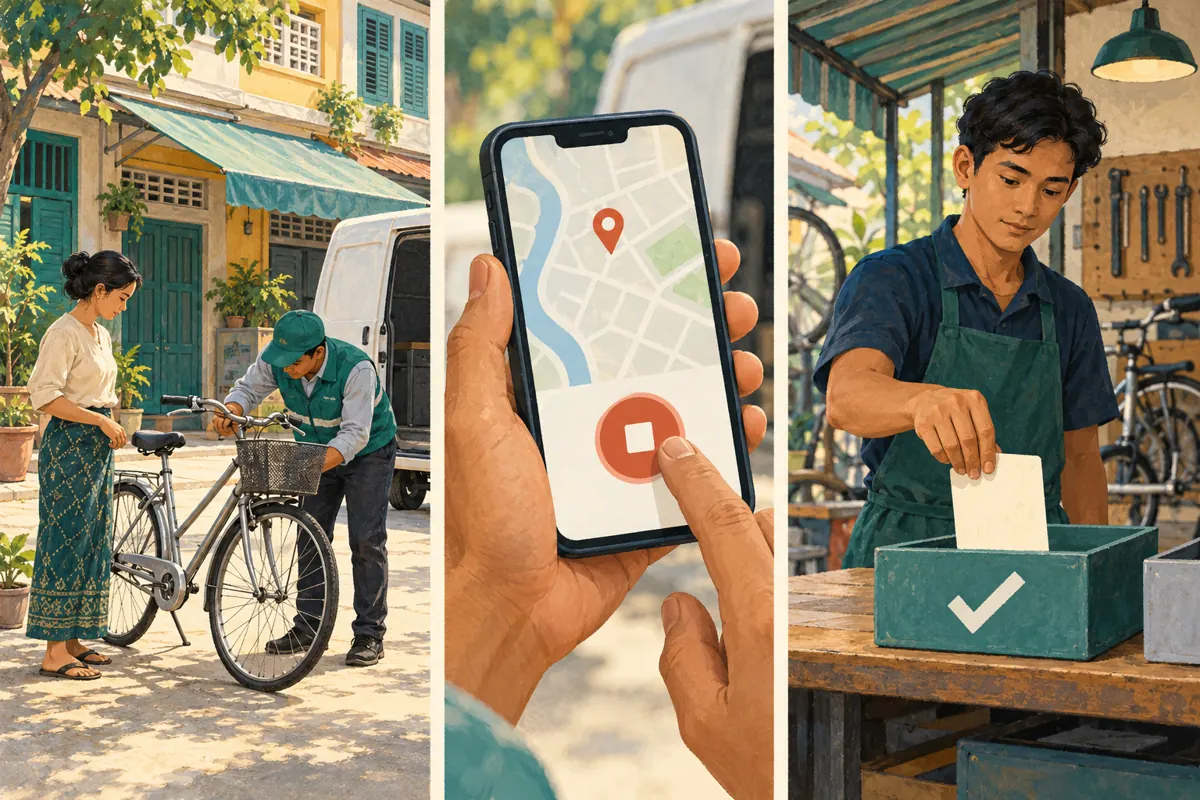
Prepared with AI assistance. Illustrations explain the workflow and do not represent customer results.