19/10/2026 18:22
Can New Shoppers Message You? A TikTok Enquiry Workflow for Cambodian Desk Shops
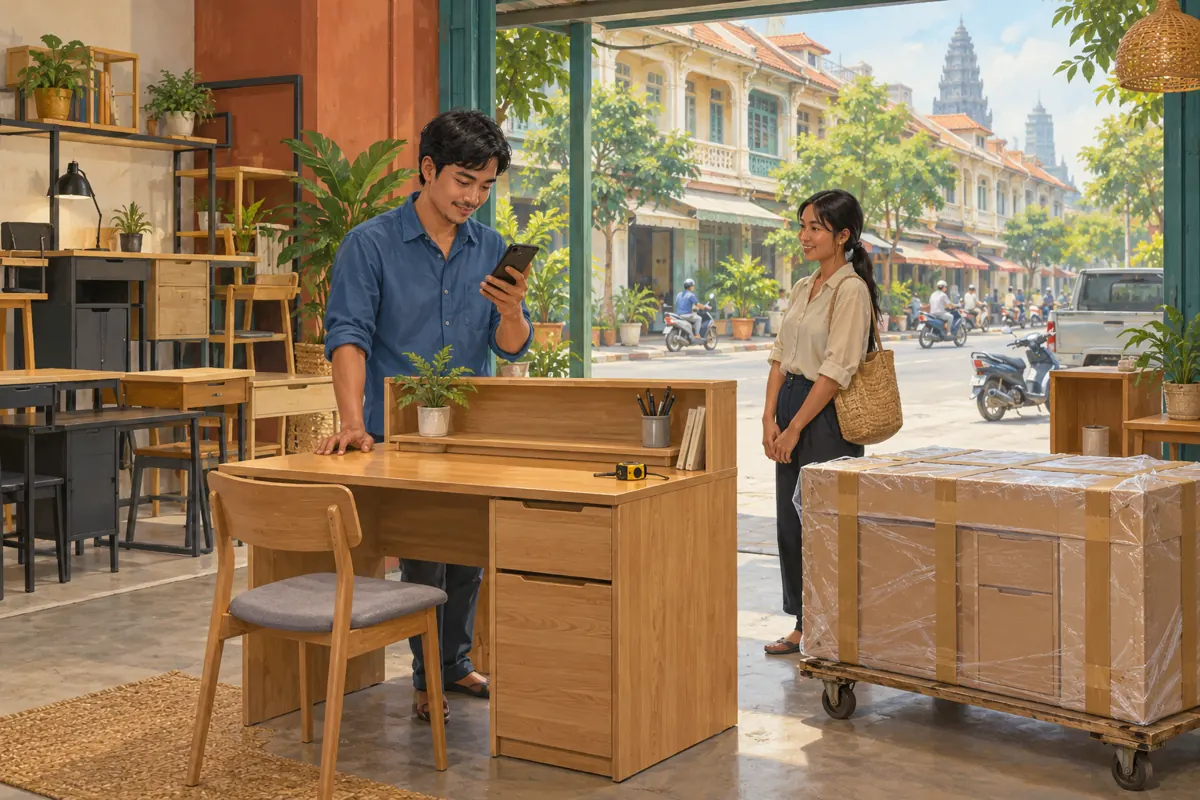
A useful desk demonstration can still leave a shopper stranded. Someone sees the drawer mechanism, likes the size and wants to ask about delivery, but the shop never notices their first message. Before spending more effort on promotion, check whether an unfamiliar customer can reach a person who can answer. This workflow helps Cambodian desk retailers connect TikTok demonstrations with practical delivery enquiries. It covers message settings, a realistic contact test, staff review and the limits of SMM panel services. Every shop scenario and sample message below is hypothetical; none represents a customer result or a promised improvement.
1. Give the conversation one practical purpose
Start with a question your team can resolve: can this particular desk be supplied and delivered to the shopper’s area? That requires more than an expression of interest. Staff need to identify the product, establish the general destination and check any access constraints. A video that ends with a vague invitation to get in touch leaves both sides deciding what to say next.
For a hypothetical Phnom Penh showroom, the invitation could be: “Message us with the desk shown and your district to ask about delivery. Please keep your full address out of public comments.” Use Khmer wording for customers who prefer Khmer, with an English version where useful. Choose language from actual customer needs rather than assuming every viewer communicates the same way.
Define completion before promotion begins. A useful enquiry ends with an answer, a specific request for missing information or a clear explanation that the shop cannot supply that location. It does not need to end in a sale to reveal whether the contact route works.
2. Review the actual message-request settings
TikTok’s Manage direct messages guidance gives this route: Profile, Menu, Settings and privacy, Privacy, then Direct messages. Review the options for potential connections and others on TikTok. Where offered, Requests allows those people to submit requests; Don’t receive prevents them. Private-account relationships can also affect access.
Have the account owner review the controls shown on the shop’s device. Record the setting selected and the date checked. Do not follow an old screenshot blindly or change unrelated privacy choices simply to match someone else’s menu. If the available options differ, consult the linked official guidance and test the actual outcome.
Decide whether someone can reliably handle unfamiliar enquiries before inviting them. A small shop may prefer a narrower contact route during a busy installation period. The important operational choice is to align the public invitation with the route the team has deliberately enabled and can maintain.
3. Rehearse contact from an unfamiliar shopper’s position
Ask a consenting adult colleague with an eligible account to test the route without first following each other. They should open the exact published video, locate the shop profile and try to send one ordinary product question. Use a neutral test message and no real customer information. This checks a journey that an existing staff conversation cannot demonstrate.
Record what the tester could do, where the request appeared and whether staff could respond. If the attempt fails, capture the visible explanation in written notes. Do not immediately attribute the failure to low follower numbers or assume a paid service will fix it. The account relationship, settings or messaging eligibility may be relevant.
Keep the rehearsal small. It is a usability check, not permission to contact strangers or generate artificial leads. After correcting a problem, repeat the failed step. A successful test supports a narrow conclusion: that particular eligible account could complete the route under the conditions checked.
4. Include requests in the daily inbox routine
TikTok directs users to Inbox, then Message requests, to review incoming requests. Some may appear under Filtered requests. Requests can be accepted, deleted or reported. Build a deliberate review of those areas into the shop’s routine instead of treating the main conversation list as the complete queue.
Assign responsibility around work that already happens, such as opening the showroom and checking outstanding quotes before closing. These are suggested routines, not platform requirements. Give each unresolved enquiry an owner and a next action in a private work record. A colleague should be able to distinguish “waiting for the customer’s measurements” from “waiting for us to check stock.”
Review suspicious approaches cautiously without dismissing every short or unfamiliar message. A genuine shopper may begin with only a greeting or a product reference. Ask a simple clarifying question when appropriate. Keep customer handling separate from requests for passwords, verification codes or unrelated account access.
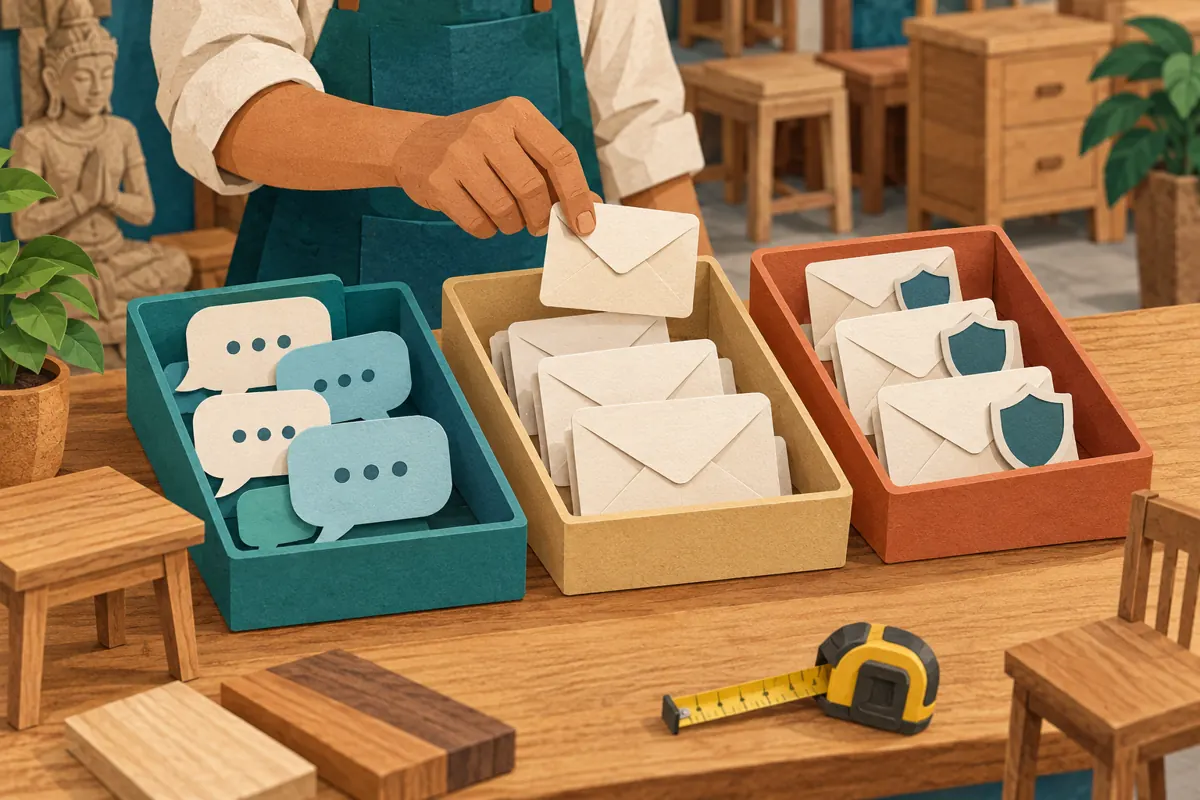
5. Ask for enough detail to answer, in the right order
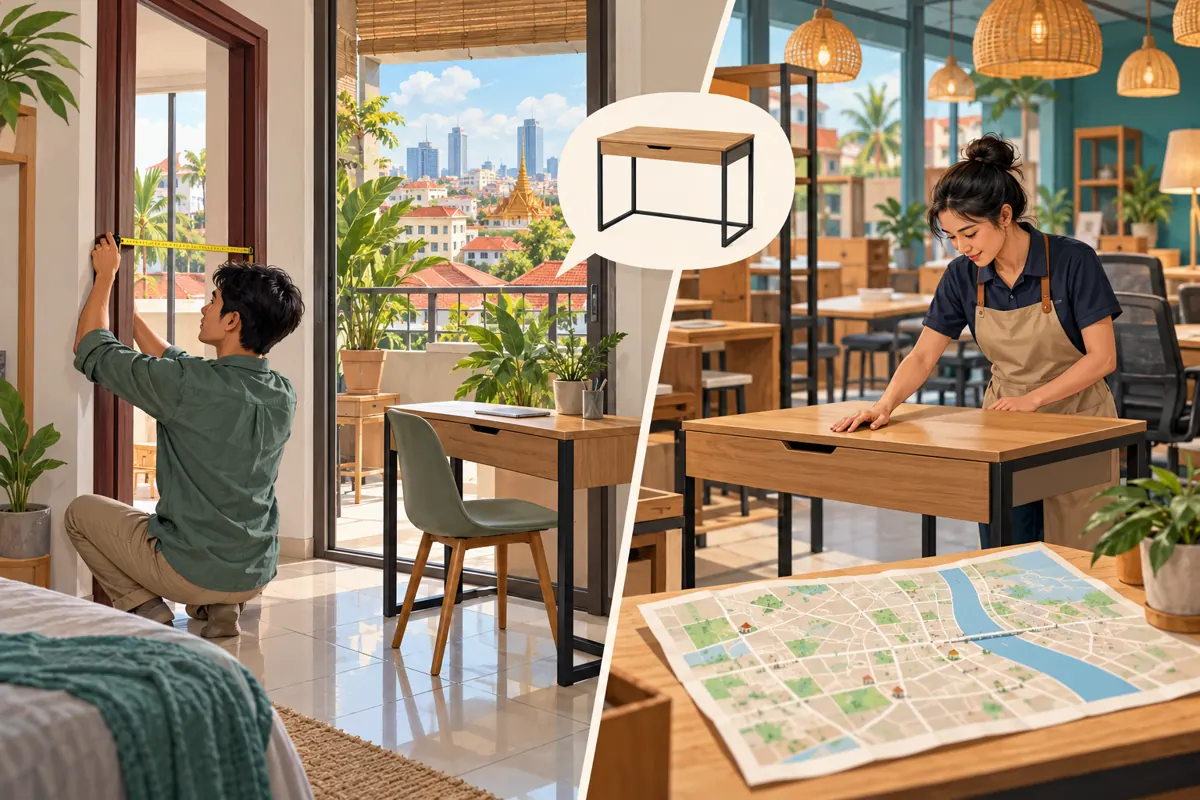
Begin with the product reference and general delivery area. Then ask whether the desk is needed assembled and whether stairs or a narrow entrance may affect access. These questions help staff decide what needs checking. A full home address, identity document or payment screenshot is unnecessary for that first assessment.
A hypothetical reply could read: “Thank you. Which desk in the video do you mean, and which district would delivery be to? Is there a staircase or narrow doorway we should consider? We will check availability and delivery arrangements before confirming.” Adapt this to what the business actually offers; do not imply assembly or upstairs carrying is included.
When discussing dimensions, state the unit and distinguish desk width, depth and height. If photographs become necessary, explain what detail is needed and arrange a suitable supported channel. Ask the customer to exclude people, documents and unrelated household information. Request precise delivery details only when the conversation reaches that stage.
6. Make the demonstration support the first reply
Show enough of the desk that a shopper can identify it later. A consistent product reference spoken in the video and repeated in its caption is more useful than a nickname staff use inconsistently. Demonstrate the drawer opening and the space beneath the desktop without implying a chair, lamp or storage accessory is included unless it is.
Keep the contact invitation near the product explanation. For the hypothetical showroom, the closing sentence might ask for the product reference and district, while stating that delivery is confirmed after checking. This creates a manageable first message without turning the video into a form or asking viewers to disclose personal details publicly.
If similar desks appear in one clip, prepare a reference image or product list for staff. A customer saying “the light wooden one” should not trigger a guess. Confirm the model before discussing availability, because an accurate conversation about the wrong desk still produces a poor customer experience.
7. Offer a fallback without promising universal messaging access
TikTok’s teen privacy guidance states that direct messaging is unavailable to people aged 13 to 15, with additional settings affecting older teenagers. Therefore, “everyone can message us” is an unsuitable promise. Do not suggest changing an age declaration or bypassing a restriction.
Provide another business contact method that the shop genuinely operates, such as a published business telephone number or its established enquiry page. Check the destination and staffing before mentioning it. Avoid inventing a clickable profile feature that is not present on the account. Instructions should describe what customers can actually see and use.
In a hypothetical case, a shopper comments that messaging is unavailable. A helpful public reply points them to the verified business contact route and asks them not to post their address. If the conversation moves elsewhere, confirm the desk reference again. Carrying over the product context matters more than forcing every enquiry to remain on one platform.
8. Evaluate panel services against the enquiry problem
The supplied catalogue includes “TikTok - Video Views ~ Max Unlimited ~ 10M/Days ~ Instant ~ 𝗥𝗘𝗙𝗜𝗟𝗟 30D”. Its name places it in the video-view category. The brief supplies no description substantiating the title’s delivery or refill claims. It provides no basis for treating the service as message handling, local audience targeting or delivery-enquiry generation.
Purchased engagement is not evidence of genuine interest, sales, official ad delivery or Cambodian users. It cannot establish that a shopper reached your inbox or understood your delivery conditions. An SMM panel listing should therefore be assessed against the actual task rather than selected because its unit is easy to count.
TikTok’s Integrity and Authenticity rules prohibit services that artificially increase engagement and describe enforcement against inauthentic signals. Check that policy before considering any offering; decline services that conflict with it. For this workflow, a working contact route, useful demonstrations and reliable replies are the practical priorities. A panel order is not a prerequisite.
9. Keep evidence of enquiries separate from promotion records
Maintain a modest enquiry log containing the product reference, general area, question, responsible staff member and next action. Use internal references instead of copying full private conversations into a marketing spreadsheet. Record only the personal information necessary for the business task, and restrict access to staff who need it.
If the shop already has panel order records, keep their service names, targets and delivery statuses in a separate record. A completed order describes an order outcome; it does not identify buyers. Likewise, a rise in visible views cannot explain why a particular person contacted the shop.
Ask customers how they found the product when that question fits naturally, and preserve uncertainty. “Customer mentioned the drawer video” is more accurate than assigning the enquiry to every promotional activity running that week. Review recurring friction: unclear desk identity, unanswered delivery questions or missing access measurements. Those observations suggest concrete improvements without requiring invented conversion claims.
10. Fix the failure you can actually observe
If the test message never arrives, inspect the contact route before rewriting the sales offer. If it arrives but waits unnoticed, adjust responsibility and review times. If staff reply but cannot identify the desk, improve product references. If the customer supplies the model but delivery remains uncertain, clarify the shop’s own fulfilment process.
Avoid changing every part of the workflow at once. Make the smallest useful correction, repeat the relevant check and keep a short note explaining the result. This lets the next staff member understand why a setting or reply changed. It also prevents a promotional purchase from masking an unresolved operational problem.
Common mistakes include testing only with a mutual follower, checking only existing chats, requesting a full address publicly and treating a general delivery discussion as a confirmed booking. Before quoting a final arrangement, explicitly confirm the product, availability, destination requirements and any charge through the shop’s established process.

Frequently asked questions
Should we follow every shopper back so they can ask about delivery?
Do not make following back an automatic sales procedure. Review the available request controls and test the contact route first. The aim is to offer a manageable enquiry method, not to create unnecessary account relationships. If a shopper cannot use that route, provide the verified alternative the shop already supports.
Can a video-view service repair missing message requests?
There is no supporting information in the supplied service description establishing that capability. Views and message access are different functions. Check the settings, the customer journey and staff review process. Also assess TikTok’s rules before considering engagement services; a catalogue title does not establish platform approval.
What should we do when the first message says only “price”?
Ask which desk the customer means, then provide the applicable product information. Explain separately whether delivery needs assessment. Avoid requiring a complete personal profile before answering a basic question. A short initial message can become useful once staff establish the product and the customer’s actual concern.
Does accepting an enquiry mean the desk is reserved?
No. Make reservation conditions explicit through the shop’s normal process. A conversation can establish suitability while stock or transport remains unconfirmed. Tell the customer what has been checked, what remains pending and what action constitutes a confirmed reservation. Do not let a friendly acknowledgement imply a commitment the shop cannot fulfil.
How can we assess progress without claiming that promotion caused sales?
Look for observable improvements: staff can find incoming requests, identify the correct desk and give a clear next step. Record customers’ stated discovery sources where available, while acknowledging missing information. Sales require separate order evidence. Keep promotion delivery records distinct so that a change in engagement is never presented as proof of purchasing intent.
Explore the current service catalogue, create an account, or ask a specific question through support tickets.
- TikTok Help Center: Manage direct messages
- TikTok Help Center: Teen privacy and safety settings
- TikTok Community Guidelines: Integrity and Authenticity
Prepared with AI assistance. Illustrations explain the workflow and do not represent customer results.