22/10/2026 15:43
Gasket or Blade Assembly? Telegram Hashtag Search for Cambodian Blender-Parts Shops

A customer looking for a blender gasket can easily land on a post showing a complete blade assembly. Both products belong to the same appliance, but they answer different buying questions. For a Cambodian spare-parts shop promoting its Telegram channel, that distinction matters more than making every post look busy. A useful search path should help someone identify the right product category and understand what still needs checking. This guide develops a practical hashtag workflow around that problem: classify the parts, prepare searchable posts, test the customer journey and separate promotional activity from genuine enquiries. The shop examples and sample tags below are hypothetical, not customer results or verified compatibility advice.
1. Define the question customers should resolve
Start with one concrete task: help a visitor distinguish a loose sealing gasket from a complete blade assembly. Avoid beginning with a broad objective such as increasing channel activity. A person can react to an attractive product photograph without understanding what is included. Write the task into the content brief so the photographer, caption writer and person answering messages use the same distinction.
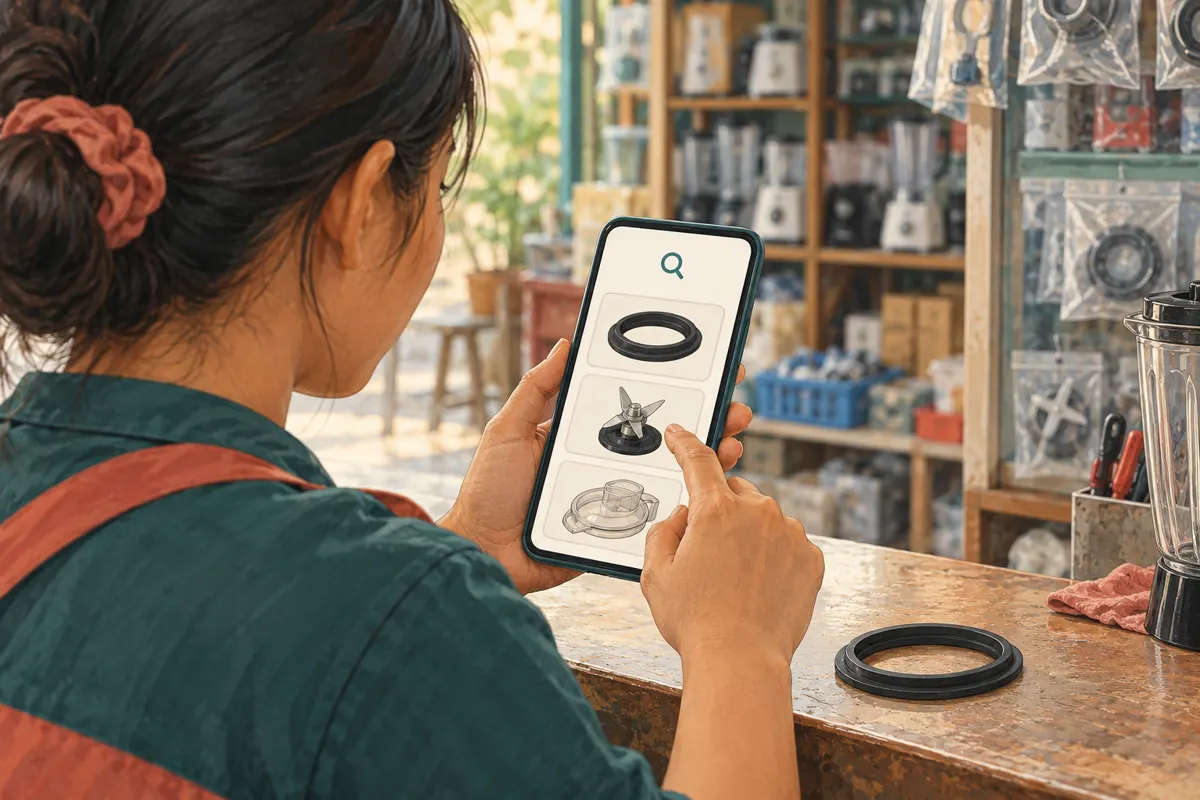
In a hypothetical Phnom Penh shop, customers send photographs of leaking blender jars and ask for the rubber part. Staff first need to establish which component the customer means. The channel can provide separate reference posts showing a loose gasket, a blade assembly and the underside of a jar. These posts support identification; they do not diagnose the leak or prove a replacement will fit. Promotion should lead people into that useful explanation.
2. Understand the search feature without promising discovery
Telegram explains that tapping a hashtag can show matching results from chats and public channels. Its official hashtag-search announcement also distinguishes public results from private conversations, which are not exposed through global hashtag search. This makes hashtags a possible navigation aid, but it does not establish that a particular shop post will appear to every searcher.
Keep the business promise narrower than the feature description. Your goal is to provide a search route that you have tested in your channel, on the devices your staff use. Do not promise global visibility, search placement or Cambodian audience delivery. A public result may also come from another seller, so teach visitors to check the channel identity before relying on prices or stock information. Telegram's supporting explanations are listed in the sources.
3. Build a small vocabulary around physical differences
Create categories that match the objects on the counter. In this hypothetical workflow, #BlenderGasket identifies loose seals, #BlenderBladeAssembly identifies complete blade units and #BlenderLid identifies lids. These are illustrative English tags, not prescribed search terms. For a Khmer-speaking customer base, have a fluent staff member choose natural Khmer wording and test it in Telegram. Explain unfamiliar technical terms in ordinary caption text.
Keep an approved list containing each tag, its meaning and one example post. Decide whether a component sold separately belongs in the same category as the assembled unit; usually, giving each a clear category prevents confusion. Preserve manufacturer model codes exactly when they are relevant, but do not turn every spelling variation into another tag. If staff cannot agree where a post belongs, improve the product description before adding more categories.
4. Make each result useful when opened alone
A visitor may open a single matching post without reading the surrounding channel history. Put the product identity near the beginning: loose gasket only, complete assembly or reference photograph. Show what is included in the sale and keep comparison objects visually separate. A photograph containing several parts should explain whether they form a package or simply illustrate differences.
For example, a hypothetical gasket post could say: Loose replacement gasket shown separately. Compatibility requires checking the jar model and gasket profile. Send a clear photograph of the model label and existing part before requesting a quote. Add the approved category tag after the explanation. Include verified dimensions and units when available, and state how to confirm current stock. A tag helps retrieve the post; the caption must carry the information needed to interpret it.

5. Test tapping and searching as separate journeys
Ask a colleague to begin at the channel's public-facing entry point with a specific task: find the post about a loose gasket. First, have them tap the tag in a relevant post and describe what results they see. Then ask them to use the channel's search function with the same term. Observe whether they stay in the intended channel or move into broader results.
Record practical failures rather than a pass mark alone. Perhaps the tag was copied with an unexpected space, the visible product photograph is ambiguous or an old post looks current. Repeat the check after correcting the cause. Test the actual devices available to your team instead of assuming every interface uses identical labels. If the tag route remains confusing, provide a direct reference to the relevant post alongside the search instructions.
6. Separate lasting categories from changing availability
A gasket remains a gasket after the last unit sells. Keep that stable product category separate from the changing stock statement. Using an availability tag as the main navigation method creates extra maintenance: an old post can retain a reassuring label long after its stock information becomes stale. Write an explicit stock-check instruction and assign someone responsibility for updating it.
Before promoting a category, inspect the posts customers are likely to find, including older examples. Mark obsolete information clearly and direct readers to the current reference where appropriate. If a supplier changes the component profile, do not silently present the replacement as identical. Explain what changed and require a fresh compatibility check. The aim is a useful reference collection with visible limitations, rather than an apparently complete catalogue that staff cannot keep accurate.
7. Move from a search result to a qualified enquiry
Give visitors a short next step suited to the product. Ask them to identify the post they mean, share the appliance model and describe whether they need the loose seal or the assembled unit. Request only information that helps answer the question. Delivery addresses and payment details are unnecessary during initial part identification and should not appear in public comments or reference photographs.
A hypothetical buyer in Battambang might recognise the gasket category but still be unsure which profile matches the jar. Staff can compare the supplied information with their verified stock specifications before discussing collection or delivery. Similar appearance alone is insufficient. If the available information cannot establish compatibility, say what additional evidence is needed or arrange an appropriate inspection. A search result is the start of a conversation, not confirmation of fit or a completed order.
8. Evaluate SMM panel services against the actual task
The brief lists the exact public service name Telegram Reactions ~ AI Based on Content ~ [Single Post] ~ INSTANT. Its title describes a reaction offering associated with a single post; the supplied description is empty. Treat the remaining wording as catalogue claims that require clarification, not independent evidence about delivery, audience quality or how reactions are selected. Nothing supplied establishes a hashtag-search or compatibility-checking function.
Before considering any service request, ask whether its stated type addresses the problem you have observed. Reactions cannot correct a mislabeled part or resolve an unclear search path. Purchased engagement is not evidence of genuine interest, sales, ad delivery or Cambodian users. Do not present it as customer endorsement. If the business needs better enquiries, prioritise the product references and response process; it is reasonable to conclude that no panel order is useful for this task.
9. Review enquiries without confusing activity with understanding
Keep a modest review log of actual questions received after promoting the reference posts. Note which product the person meant, what information was missing and whether staff could provide a useful answer. If someone says they found the post through a tag, record that as their report. Do not assume every enquiry came from search simply because hashtags were present.
Separate any purchased service records from this enquiry log. A reaction total and a compatibility conversation describe different events. For a hypothetical review, repeated requests for a whole assembly after viewing the gasket post would suggest revising the photograph or opening sentence. That observation does not require an invented conversion rate. Look for specific misunderstandings you can correct, and keep conclusions proportional to the evidence available.
10. Fix the mistakes that make parts searches unreliable
Avoid adding every category tag to every post. Doing so removes the distinction the tags were meant to provide. Avoid tagging a broad promotional collage as a precise component guide unless the caption clearly identifies each item. Another common mistake is switching between several names for the same part without explaining the relationship, leaving customers unsure whether they have found different products.
Do not turn one successful search test into a permanent assumption. Recheck the route when you change category wording, replace a major reference post or reorganise product information. Give one staff member ownership of the approved vocabulary and let others report confusing cases. The maintenance question is simple: can a visitor find the relevant reference, understand its limits and send the information needed for the next step? Use that question to decide whether the channel is ready for promotion.

Frequently asked questions
Should a Cambodian shop use Khmer tags, English tags or both?
Use wording your customers understand and your team can maintain consistently. A shop serving Khmer-speaking buyers should review Khmer terms with a fluent staff member. English technical terms may help some customers, but adding both languages everywhere can create clutter. Test a small vocabulary first and explain equivalent terms in the caption when useful.
Will a unique hashtag guarantee that customers only see our shop?
No. A distinctive tag is a naming choice, not exclusive ownership of a search term. Check the result context and show visitors how to recognise your channel. Keep current contact and product information in the reference post so readers can verify where an offer comes from.
Should every old product post receive the new category tags?
Begin with accurate, useful reference posts. Review older material before adding it to the same retrieval path. Tagging an outdated offer can make misleading information easier to find. Where an old post still has reference value, explain its status and direct readers to current stock or specifications.
Can reactions tell us which replacement part to stock?
Reactions alone do not establish demand for a compatible part. Purchased reactions are especially unsuitable as evidence of buyer preference. Use actual enquiries, verified model requests and completed orders as separate records, and consider why an enquiry did not progress before drawing conclusions about stock.
What if customers still send a photograph instead of searching?
Accept that route and use the category posts to support the reply. The workflow should reduce confusion, not require customers to learn your filing system. Record unfamiliar terminology from genuine questions, then improve the captions or category explanations where the same misunderstanding recurs.
Explore the current service catalogue, create an account, or ask a specific question through support tickets.
- Telegram: Message Effects, Hashtag Search, and More
- Telegram: Mini App Bar, Paid Media, Story Search & More
Prepared with AI assistance. Illustrations explain the workflow and do not represent customer results.