22/10/2026 07:04
Share the Sample, Protect the Lesson: Telegram Content Controls for Cambodian Weaving Studios
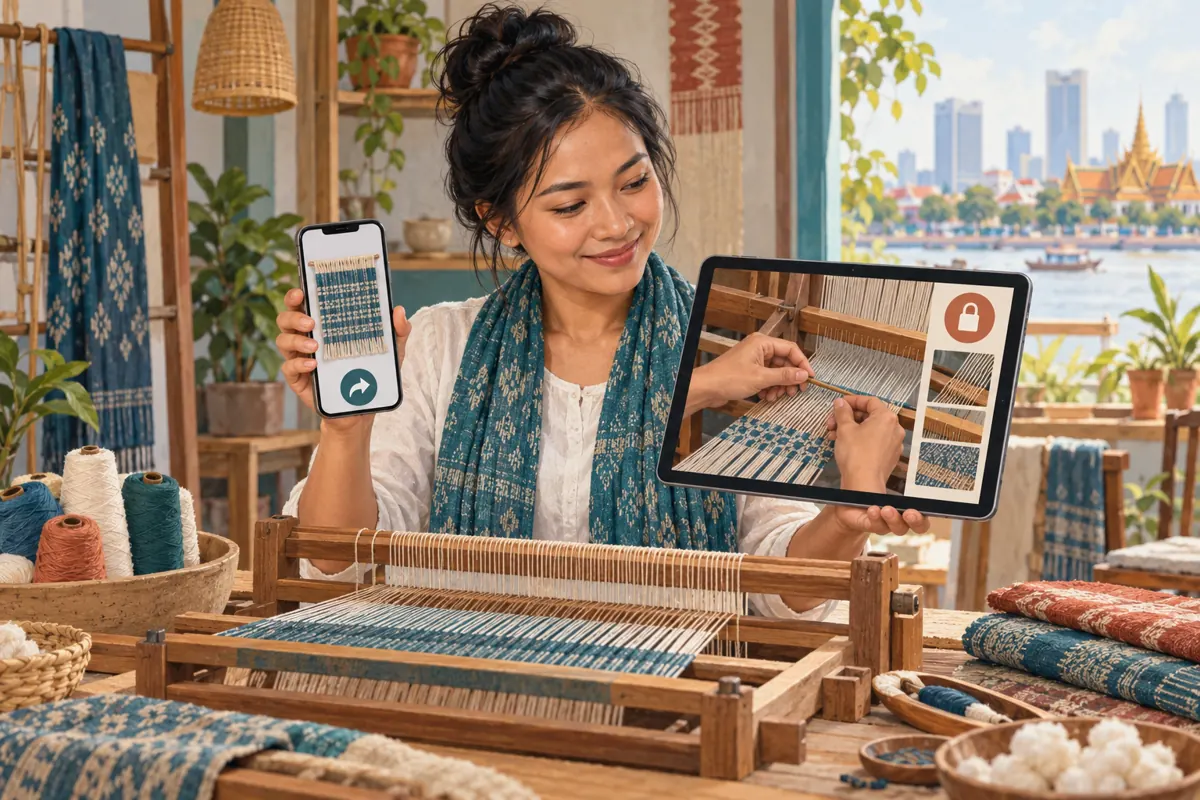
A weaving studio needs prospective learners to see enough of its teaching to decide whether a workshop suits them. It may also want detailed paid lessons to stay within the enrolled class. Putting both kinds of material in one Telegram channel creates a difficult choice: make everything easy to share, or restrict sharing and make promotion less convenient. A better starting point is to decide which material belongs in public before changing any settings. This guide develops that workflow for Cambodian craft businesses, including a learner access test and a careful review of where SMM panel services fit.
1. Start with the learner’s decision
Consider a hypothetical Phnom Penh studio teaching beginners to weave a small cotton mat. Its public sample shows the finished piece, the equipment used and a short explanation in Khmer. Its paid lesson contains the complete setup sequence, close views of the thread path and corrections for common mistakes. These assets answer different questions. The sample helps someone judge suitability; the lesson helps an enrolled learner perform the work.
Write down what a prospective learner must know before contacting the studio: teaching language, required equipment, whether materials are included, lesson format and how to ask about availability. Check each fact with the instructor. A beautiful finished mat alone cannot answer those questions. Promotion becomes more useful when the sample explains what the learner will actually receive, without suggesting that a beginner will automatically reproduce the instructor’s result.
2. Understand what Telegram’s restriction changes
Telegram’s official protected-content documentation says group and channel owners can restrict forwarding, prevent screenshots and limit saving media. Its published navigation is Group or Channel Info, then Group or Channel Type, then Restrict Saving Content. Locate the corresponding control in your current app; menu presentation can vary. This is a setting for the group or channel, so plan the content collection before enabling it.
Treat this as a sharing restriction, not a guarantee that information can never escape. Someone who can view a lesson can still describe its contents or photograph a display with another device. The practical purpose is to reduce casual redistribution through supported app functions. It does not replace clear teaching terms, permission to use the material, or careful decisions about what the studio uploads.
3. Sort material before separating destinations
Make a short inventory of the proposed assets. Assign each one a purpose: public promotion, enrolled instruction or internal administration. A finished-piece photo and equipment introduction might be public. A complete original lesson might belong with enrolled learners. Payment records, contact details and private student feedback belong outside the promotional content collection. Review the actual footage, including tables and backgrounds, rather than relying on filenames.
Then choose destinations that support those purposes. Telegram’s Channels FAQ distinguishes public channels, which people can find and join, from private channels that require an invitation or addition by the owner. Access and saving restrictions are separate decisions. For the hypothetical studio, a public sample channel and a private lesson channel provide a workable arrangement. Keep private admission links out of the public sample unless unrestricted entry is genuinely intended.
4. Make the public sample useful on its own
Create the sample from the original recording or shoot a separate introduction. Avoid making your promotional process depend on forwarding a protected lesson. Show the material, the working position and one understandable action. For example, the hypothetical studio could demonstrate how to recognise an uneven edge, while explaining that the full class covers setup and correction. The preview should teach something small without pretending to be the complete course.
Give the sample its own caption with the workshop format, teaching language and enquiry route. If learners need their own loom, say so before asking them to enquire. If the studio supplies one only during an in-person session, distinguish that from taking equipment home. Use clear Khmer for a Khmer-speaking audience and explain unfamiliar craft terms. Keep promises about access, downloadable material and instructor support consistent across every promotional version.

5. Test the lesson as an ordinary learner
Before promoting enrolment, ask a consenting colleague to test the proposed lesson arrangement using an ordinary member account. Do not rely solely on the owner’s view. Use a harmless practice lesson containing no student information. Ask the tester to open it, play the demonstration, pause at the thread crossing and return to the same lesson later. Observe whether the teaching remains usable beside a loom.
Check the sharing and saving behaviour you intend to restrict on the devices the test covers. Record the app, device, date and observed result without claiming that one test proves every possible situation. Then test the public sample separately. Can the colleague share the approved preview and find the enquiry route? Keep the two outcomes distinct: a restricted lesson can work correctly while the public sample still needs a clearer caption.
6. Resolve download needs before accepting payment
A learner may expect to save a lesson for use somewhere with an unreliable connection. Another may want a printed reference beside the loom. Ask about these needs during enquiries instead of assuming that everyone can study comfortably inside the app. A restriction that protects the studio’s preferred distribution method may also create friction for a legitimate customer. That tradeoff should be visible before enrolment.
Decide what alternative the studio can actually supply. Possibilities include an original printable materials list, an authorised reference sheet or an in-person review session. These are business choices, not features promised by Telegram. In the hypothetical workshop, the teacher might provide a separate downloadable equipment sheet while keeping the detailed video within the lesson channel. State that distinction plainly, and do not advertise an offline video package if the delivery arrangement does not provide one.
7. Check whether an SMM service addresses the problem
The supplied top-smm.com catalogue includes “Telegram - 𝗔𝘂𝘁𝗼 Views ~ Instant ~ [𝗡𝗲𝘄 𝗣𝗼𝘀𝘁 / 𝗢𝗹𝗱 𝗣𝗼𝘀𝘁]”. Its name identifies an automatic-view offering, but the supplied description is empty. That provides no basis for confirming target requirements, compatibility with protected content, audience location or delivery behaviour. Treat the wording as a catalogue label requiring clarification, rather than verified evidence of how a service will perform.
First identify the actual obstacle. If people cannot understand the class offer, revise the sample. If learners cannot use the lesson, fix delivery. A view service cannot resolve either issue. Purchased engagement is not evidence of genuine interest, sales, ad delivery or Cambodian users. Do not provide a protected lesson invitation merely to make a service request possible. Review applicable platform rules and documented service requirements before deciding whether any order is appropriate.
8. Keep promotion and admission operationally separate
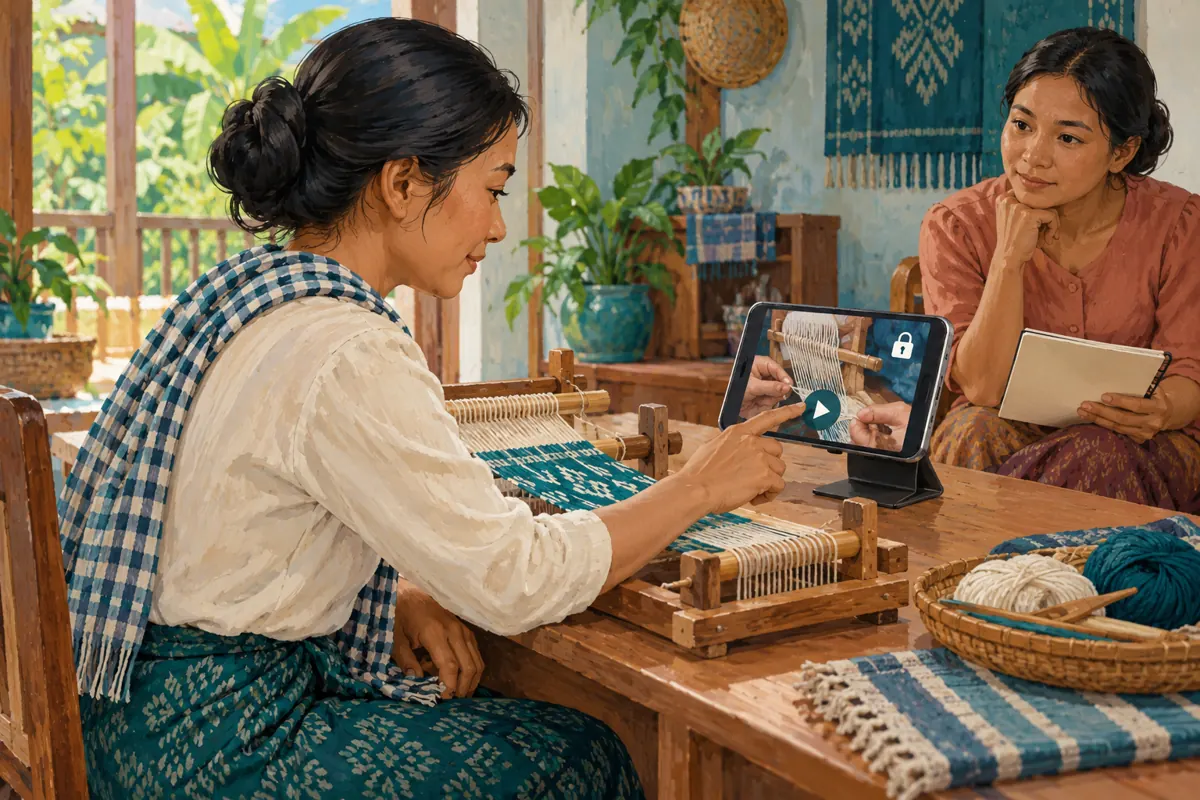
Give the person handling promotion a small approved package: the public sample, its caption, the public destination and the current enquiry instructions. Give the person handling enrolment the confirmed access terms and the procedure for admitting an eligible learner. This reduces the chance that a private lesson link will be pasted into a public advertisement or sent as a casual preview.
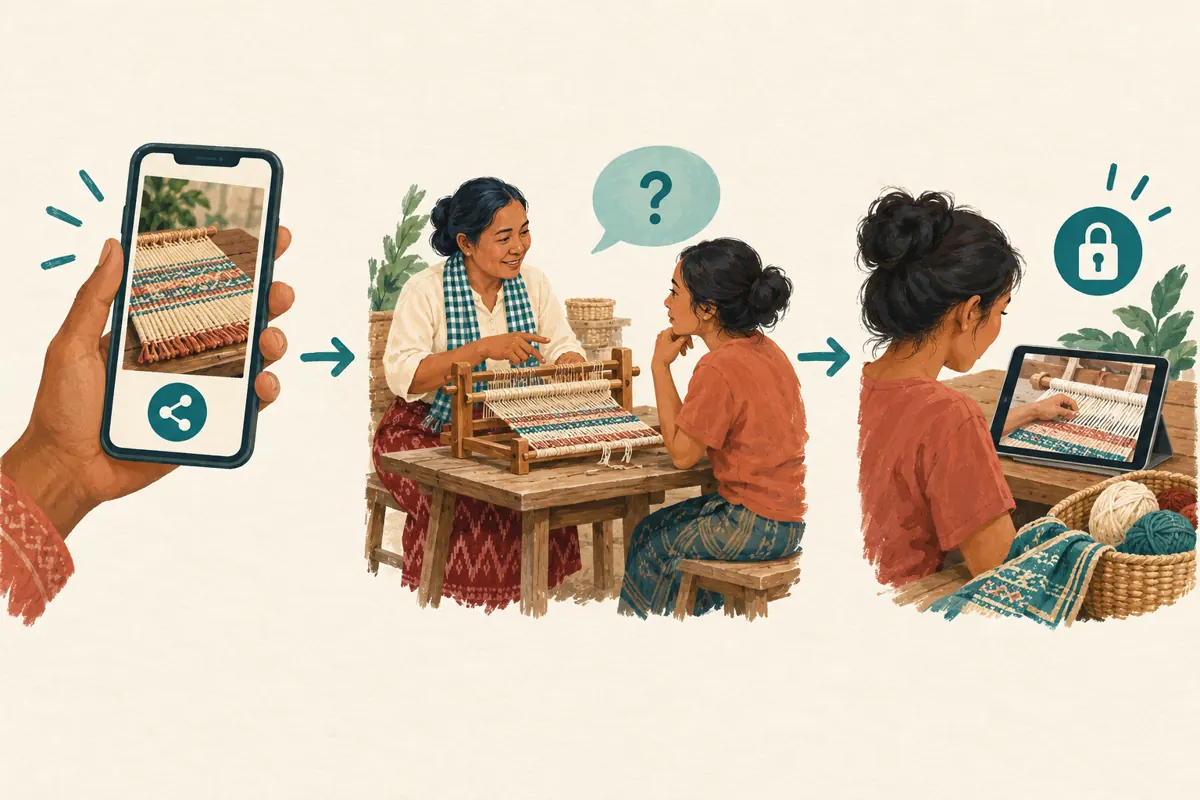
For the hypothetical studio, the customer journey could be sample, suitability question, agreement on the class offering, then admission. Do not treat an enquiry as a confirmed place. Ask only for information needed to arrange the class, and keep payment evidence out of public discussions. If a promotion assistant also reviews panel services, explicitly identify the public asset under consideration. Staff should never have to infer the intended destination from two channels with similar names.
9. Review questions and access problems separately
Maintain a simple review note with separate entries for prospective learner questions and enrolled learner access issues. Questions such as whether the class uses cotton or whether equipment is supplied reveal gaps in the offer. Reports that a learner cannot follow the hand movement reveal teaching or delivery problems. Neither is resolved by a larger visible audience count.
Telegram describes channel view counters as approximate and notes that forwarded copies contribute to them. Avoid equating those totals with unique prospective students. If any purchased engagement is involved, retain that context alongside the relevant records. Assess the workshop through confirmed enquiries, agreed enrolments and specific learner feedback, while respecting privacy. A useful review might conclude that the materials explanation needs improvement even when the sample appears to attract attention.
10. Avoid fixes that create a larger problem
One common mistake is restricting the only channel containing both advertisements and lessons, then asking students to share an announcement they cannot easily forward. Another is temporarily relaxing restrictions across the lesson channel to distribute one promotional clip. Prepare a separate public copy instead. Also avoid describing a protected lesson as impossible to copy; that promise exceeds what a practical content control can establish.
If a learner encounters difficulty, reproduce the issue with the practice lesson before changing the entire channel’s settings. Establish whether the problem concerns playback, finding the correct lesson or an expected download. Explain the intended access arrangement and provide the agreed alternative where applicable. If the studio changes its delivery model, update promotional claims before accepting new enrolments and communicate relevant changes to existing learners. Keep an internal record of the decision so the next assistant gives the same answer.
Frequently asked questions
Should every Cambodian craft studio enable Restrict Saving Content?
No. Start with the material’s purpose and the learner’s needs. A freely distributed care guide may benefit from convenient saving and sharing. An original paid lesson may justify restrictions, provided the advertised access terms match the experience. Use a practice lesson to test the arrangement before applying it to a live teaching collection.
Does making a channel private also solve content redistribution?
Private access and content handling address different questions. One concerns entry; the other concerns actions available after entry. Decide both deliberately. Even with restrictions, avoid promising absolute secrecy. Upload only material the studio is authorised to distribute, and explain the permitted use of the lesson in ordinary language.
Can we promise downloads now and restrict saving later?
Do not make an offer that conflicts with the planned delivery. If downloads were included in the agreed package, resolve that commitment before changing the arrangement. For future classes, describe exactly which resources are downloadable and which are intended for viewing within the lesson channel. Give prospective learners enough information to decide whether that suits them.
What if a panel service asks for the private lesson link?
Pause the request and establish why that destination is required. Do not expose enrolled teaching material to satisfy an unclear service requirement. Ask for documented eligibility and input requirements, then decide whether the service has any legitimate role in the public promotion plan. An unresolved compatibility question is a reason to defer an order.
How can we tell whether the sample is helping enrolment?
Ask enquirers which sample they saw and what they still need to know, without requiring unnecessary personal information. Compare recurring questions with the caption and demonstration. Keep confirmed enrolments distinct from casual messages. These observations can guide improvements, but they do not establish that every enrolment was caused by a particular post or service.
Explore the current service catalogue, create an account, or ask a specific question through support tickets.
- Telegram: Protected Content, Delete by Date, Device Management and More
- Telegram Channels FAQ
- Telegram Technical Documentation: Content Protection
Prepared with AI assistance. Illustrations explain the workflow and do not represent customer results.