20/10/2026 00:43
Is the Lunch Offer Ready? Telegram Checklists for Cambodian Catering Teams

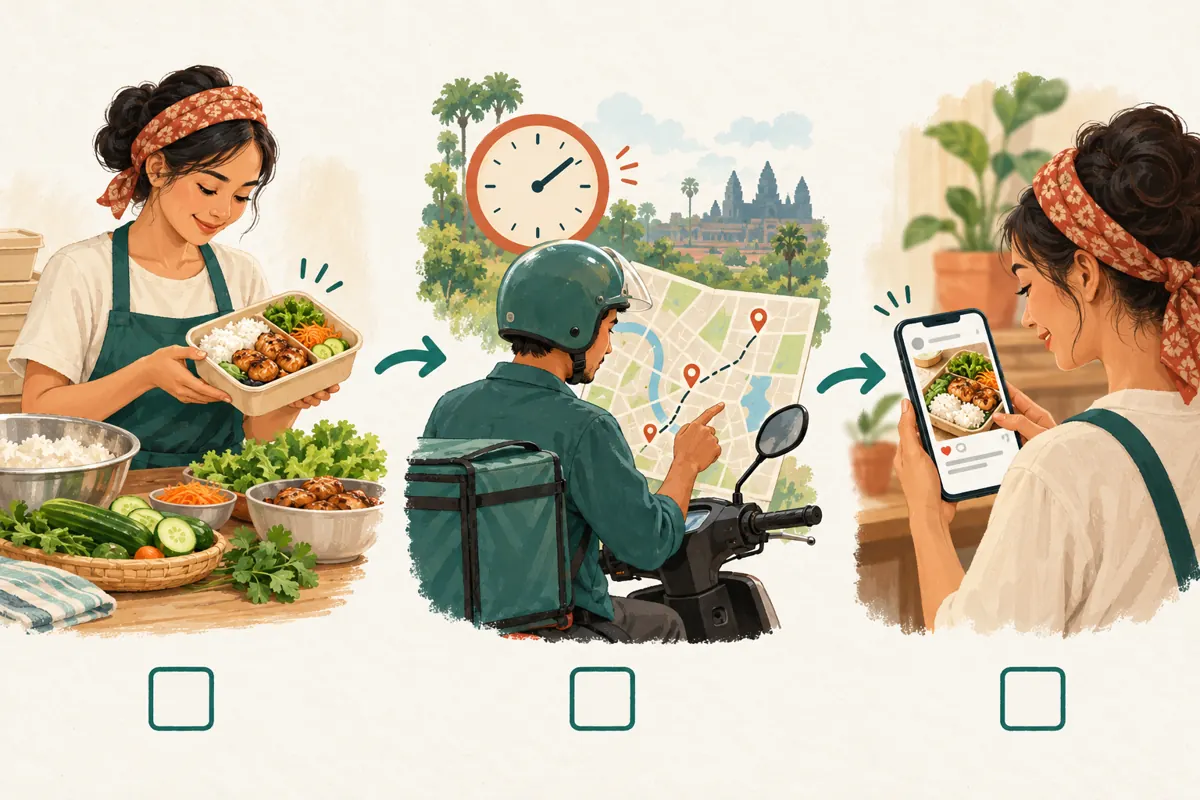
A lunch-box promotion can look finished while important questions remain unanswered. The photo shows one meal, the kitchen is preparing another, and the person answering messages does not know whether delivery is included. For a Cambodian catering business promoting office lunches through Telegram, those gaps can create more work precisely when enquiries begin. A shared preparation checklist gives the team a practical place to resolve them. This workflow follows a hypothetical Phnom Penh caterer preparing an office-lunch offer. It explains how to choose checklist tasks, control participation, handle changed information and decide whether any SMM service is relevant. The aim is a clear offer that staff can fulfil and customers can understand.
1. Define the offer before creating the list
Start with one offer and one decision: is this particular lunch promotion ready to share? Avoid creating a checklist called “Marketing” that mixes tomorrow’s menu with kitchen repairs and future photography. A useful title identifies the meal offer and intended service date. Put the working menu, draft caption and responsible staff member in an accompanying message so everyone reviews the same material.
In this hypothetical example, the caterer wants office administrators to request a group lunch quotation. The post therefore needs to explain the meal options, the information needed for a quote and the limits of delivery availability. It does not need to suggest that every message reserves meals. Decide what a customer should do next before deciding how widely to promote the post.
2. Choose where the checklist belongs
Telegram’s official checklist announcement says Premium users can create checklists through the attachment menu by selecting Checklist. Supported destinations include groups, individual chats and Saved Messages. For a catering team, a small staff group is a practical setting because the kitchen lead and enquiry handler need to review the same offer. A sole operator can prepare the list in Saved Messages.
Check that the person creating the list can access the feature before relying on it for a deadline. If the control is unavailable, use a clearly labelled ordinary task message with a named person maintaining completion notes. The working method remains useful without an interactive checklist. Keep internal preparation details out of the public promotional post; customers need the finished offer and a clear enquiry route.
3. Write tasks that have observable completion conditions
Each item should describe something a colleague can actually verify. “Check lunch” is ambiguous. “Confirm which side dishes are included in the photographed meal” gives the kitchen lead a specific question to answer. Other useful items include confirming packaging, checking whether utensils are included, verifying the delivery area and making sure the caption explains how customers request a quotation.
Separate facts that can change independently. Menu availability and delivery availability deserve different items because one may be ready while the other remains uncertain. Keep the list focused on facts that affect the customer’s decision. Routine kitchen procedures belong in the business’s operational system; this promotional checklist should establish that the advertised offer matches what the team is prepared to discuss and supply.
4. Agree who can change the checklist
Telegram provides controls for whether other people can mark checklist tasks complete and whether they can add items. Its technical documentation treats those as separate permissions. Choose them deliberately. A small, trusted preparation team may benefit from collaborative completion, while a broader discussion group may work better with one coordinator maintaining the list after receiving staff confirmations.
These controls do not replace an ownership agreement. In the accompanying message, state who confirms the menu, who verifies delivery conditions and who reviews the customer-facing wording. Do not assume the app assigns each task to that person or restricts completion to them. Before using the list for a real promotion, try a harmless practice item so participants understand what their current interface allows.
5. Check the photograph against the actual meal
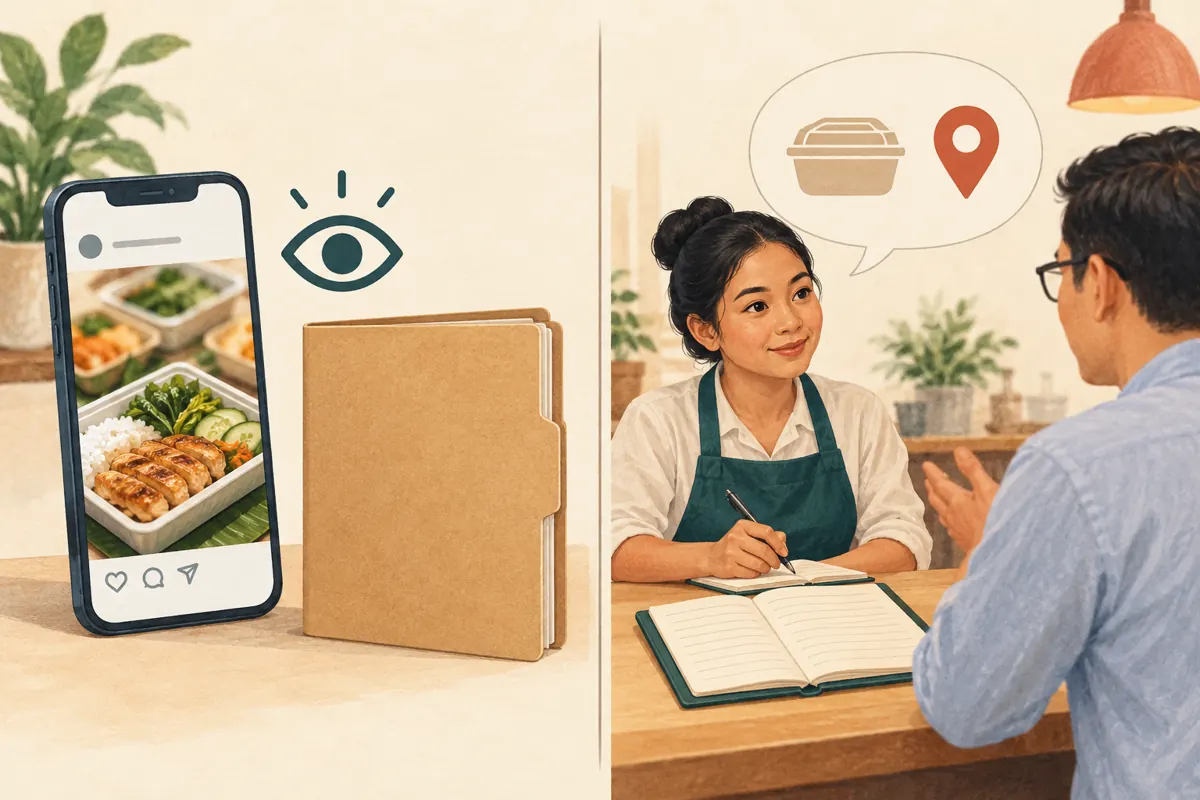
Place the proposed promotional photograph beside the menu notes and review them together. Does the image contain a drink, sauce or side dish that is not included? Does the packaging shown match what the customer will receive? If a prop makes the meal look more complete than the offer, change the photograph or clearly explain the inclusion. Do not leave the enquiry handler to correct a predictable misunderstanding repeatedly.
For the hypothetical caterer, the photograph might show fruit that was added only for the shoot. The team should resolve that discrepancy before completing the image-review task. The same principle applies to portion descriptions: use information the kitchen has confirmed, rather than visual guesses. Check the post on a phone so the meal remains understandable when the image is displayed at ordinary viewing size.
6. Make delivery and enquiry instructions usable locally
A Cambodian office customer may describe a location through a building name, neighbourhood or nearby landmark. Prepare the enquiry handler to ask for enough detail to assess delivery without announcing blanket availability. If the offer covers only selected areas of Phnom Penh, identify that limitation clearly. Explain whether delivery charges require confirmation and distinguish an order deadline from an estimated arrival window.
Use the languages the intended customers understand, with the same conditions in every version. A Khmer caption and an English quotation note should not imply different inclusions. For this hypothetical campaign, the initial reply could request the service date, approximate meal quantity and delivery area. Ask for more precise contact and location information privately when needed, rather than collecting it in public discussion.
7. Use unresolved items to make a publishing decision
An unchecked task is useful information. If the kitchen has not confirmed an advertised meal option, postpone the offer or revise it to describe only confirmed availability. If delivery coverage remains uncertain, avoid wording that promises delivery to every reader. Agree in advance which unresolved items block publication so the person preparing the post does not have to improvise under time pressure.
Completion should also have a short explanation where the underlying fact matters. In the hypothetical team, the delivery coordinator might confirm that the stated area is supportable for the specified service date. Keep that confirmation near the working draft. A tick records task status; the supporting note explains what was checked. This distinction helps another colleague understand the decision without repeating the entire discussion.

8. Recheck affected tasks when the offer changes
Treat checklist completion as tied to the reviewed version of the offer. If the kitchen substitutes a side dish after review, revisit the photograph, menu wording and prepared reply. Telegram’s checklist documentation supports marking tasks completed or incomplete. Use that capability to reopen affected work, accompanied by a plain explanation of the change, rather than leaving an old completion state to imply current accuracy.
If the post is already public, first establish what customers can still see and what needs correction. Tell the enquiry handler about the revised condition before continuing promotion. Check existing customer conversations separately because changing a public offer does not establish that an earlier customer has accepted a substitution. When practical, keep a brief dated note of the change so staff can reconcile different versions of the offer.
9. Decide what an SMM service could actually address
Only consider a panel service after identifying the remaining problem. Missing meal details require an editorial correction. Unanswered messages require staffing. Uncertain delivery coverage requires an operational decision. Buying engagement does not resolve any of these issues. For a business seeking local catering enquiries, improving the offer and sharing it through relevant, permitted business relationships may be more useful than increasing a visible counter.
The supplied top-smm.com catalogue includes the exact public service name “Telegram Post Views [Last 1 Post]”. Its title identifies a post-view offering referring to the last post, but the supplied description is empty. That is insufficient to establish targeting rules, delivery behaviour or audience characteristics. Seek current public details before making any decision, especially about what “Last 1 Post” means when another message is published.
Purchased engagement is not evidence of genuine interest, sales, ad delivery or Cambodian users. A panel listing also does not establish official Telegram affiliation. Do not present a purchased view count as proof that local offices want the lunch offer. If an order already exists, retain its reference and terms separately from the team’s preparation checklist, and do not assume changing the post will change or cancel that order.
10. Review the questions customers actually ask
After sharing the offer, review genuine enquiries for missing information. If several conversations need clarification about utensils, improve that part of the next post. If customers describe delivery locations outside the stated area, examine whether the restriction is easy to notice. Record the question and the resulting editorial change without copying unnecessary customer details into the shared marketing discussion.
Keep separate records for post visibility, enquiries, quotations and confirmed orders. A conversation becomes a confirmed order only through the business’s actual confirmation process. In the hypothetical campaign, an office administrator asking about menu options remains an enquiry until the relevant terms are agreed. This approach lets the team learn from real customer needs while avoiding unsupported conclusions about what any purchased engagement achieved.
Frequently asked questions
Does everyone on the catering team need Telegram Premium?
Telegram’s announcement specifies Premium for creating checklists and describes controls for other people’s participation. Do not assume every colleague’s account and app will behave identically. Have the intended creator set up a practice list and test the required actions with the team. If participation is unavailable, colleagues can send confirmations to a coordinator who maintains the working record.
What if a colleague marks a task complete without checking it?
Reopen the task and ask for the factual confirmation it requires. Discuss the completion rule with the team: a tick should mean the stated check has been performed, not that someone intends to perform it. If accidental completion continues, use a coordinator to maintain the list and collect confirmations in accompanying messages.
Should the checklist include individual customer orders?
Keep this list focused on preparing the promotional offer. Mixing customer orders with campaign tasks makes completion ambiguous and can expose details to colleagues who do not need them. Use the business’s established order record for quantities, agreed terms and delivery information. The promotional checklist can verify that the enquiry handler knows how to move a request into that process.
Can a completed checklist justify promoting the post more widely?
It establishes that the team performed the listed preparation checks. It does not establish audience demand, fulfilment capacity for every possible response or a likely sales outcome. Before expanding promotion, confirm that someone can answer enquiries and that the offer remains available. Choose distribution based on audience relevance and applicable rules, rather than treating checklist completion as a performance forecast.
How should a caterer assess a Telegram post-view service?
First decide whether a view-related service addresses a legitimate business need at all. Read the current public description, clarify the required target and review applicable platform rules. The supplied catalogue title alone cannot establish Cambodian audience delivery or genuine customer interest. If the objective is catering enquiries, assess actual conversations and agreed orders rather than interpreting a changed view counter as proof of success.
Explore the current service catalogue, create an account, or ask a specific question through support tickets.
- Telegram: Checklists, Suggested Posts and More Monetization Options for Channels
- Telegram Technical Documentation: Checklists and To-Do Lists
Prepared with AI assistance. Illustrations explain the workflow and do not represent customer results.