21/10/2026 03:24
Which Fold Makes the Base? Telegram Video Timestamps for Cambodian Paper-Bag Workshops

A learner can watch a paper-bag demonstration and still miss the moment when the bottom opens into a diamond. Sending the whole video again leaves them searching through preparation, folding and finishing to locate one movement. For Cambodian workshops promoting craft classes or packaging lessons, a useful timestamp can make that answer easier to find. This guide explains how to select meaningful moments, test Telegram navigation and connect a tutorial to a clear enquiry. It also explains where SMM panel records belong: alongside the promotion plan, with no assumption that purchased engagement represents learning, Cambodian viewers or workshop bookings.
Start with the learner’s exact stopping point
Consider a hypothetical paper-bag workshop in Phnom Penh. Its instructor shares a demonstration before a class so learners can prepare their materials. One person asks how to open the base; another asks whether the side crease should face inward. Both questions concern the same video, but they need different starting points. A reply saying “watch the tutorial” does little to distinguish them.
Before adding navigation, write down the questions that the recording actually answers. Match each question to a visible action, such as opening the bottom, aligning the flaps or checking the finished shape. If the instructor’s hands conceal the action, a timestamp cannot repair it. Record a clearer close-up first. The practical decision is whether the viewer needs help finding an explanation or needs a better explanation.
Understand the two ways to point to a moment
Telegram’s official timestamp documentation explains that a time such as 0:45 in a video caption becomes a tappable link that starts playback at that point. Timestamps also work in replies to a video. This makes the caption useful for recurring questions and a direct reply useful for one learner’s specific difficulty.
Telegram also documents sharing video links that include the current playback time. In the video player, use the share arrow and the option to include the current time. This creates a reference to a selected moment that can be shared elsewhere. Choose caption timestamps for a short navigation list; choose a timed link when directing someone to a particular step. Check the result in the app you use before distributing it.
Finish the edit before choosing timestamps
A reliable index begins with a stable recording. Remove unnecessary setup footage, check that the paper contrasts with the table and keep the critical movement in frame. Show the starting shape before changing it. For a Cambodian audience learning in Khmer, keep spoken explanations and on-screen cues consistent with the terms used during the class.
Then watch the final export and record the start of each useful explanation. Do not take times from the editing timeline if the exported video includes an added introduction. Begin each reference slightly before the decisive movement so the viewer sees the hand position and paper orientation. Check that the selected time belongs to the uploaded version. A tiny edit near the beginning can shift every later reference and make an otherwise careful caption misleading.
Build a short index around actions
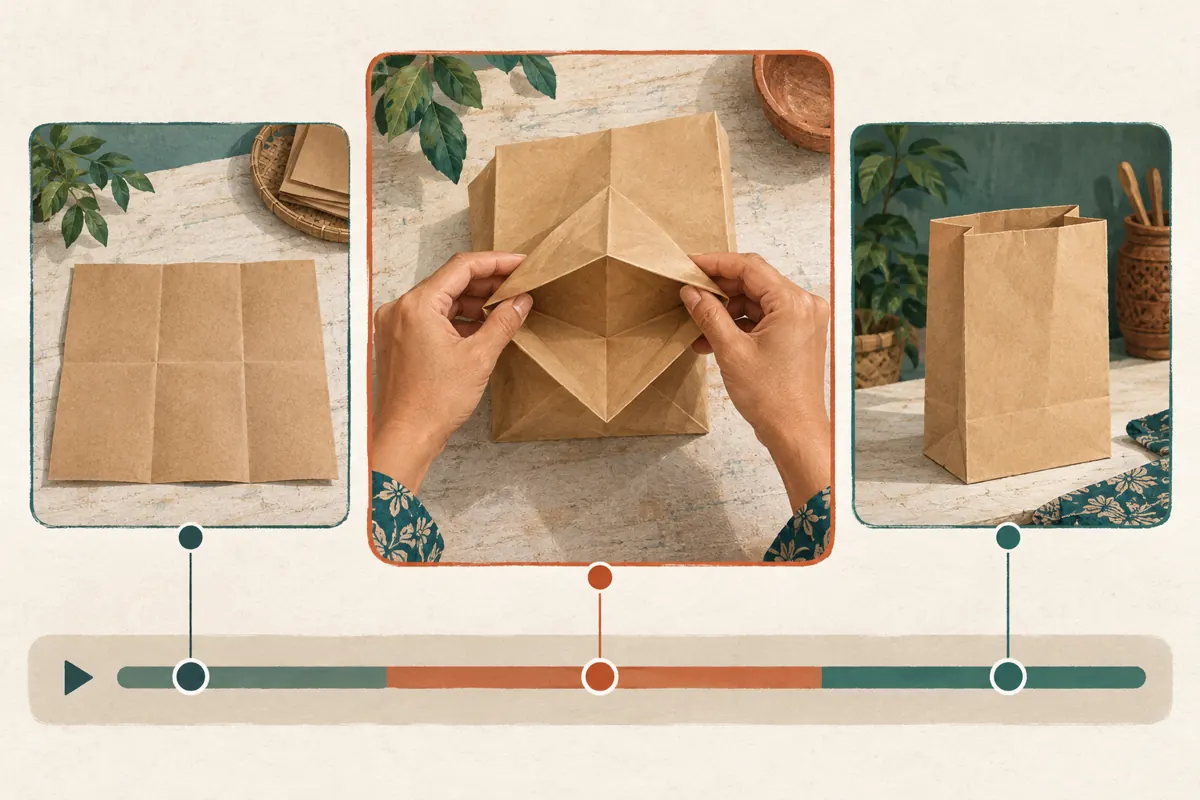
In a hypothetical finished tutorial, the caption might identify 0:18 for paper orientation, 1:06 for the side crease, 2:14 for opening the base and 3:02 for checking the overlap. These are illustrative times, not a template to paste into another recording. Each must be replaced with the actual moment in your own video.
Use labels that distinguish what the learner will see. “Open the base” is more useful than “Important part,” while “Check which flap overlaps” is clearer than “Finishing.” Keep the list short enough to scan on a phone. A timestamp for every movement creates another navigation problem. Put the tutorial’s purpose and material assumptions before the index, then place a single next step after it, such as asking about the next beginner session.
Test the route as a learner would
After preparing the post, tap every timestamp and watch what appears immediately afterward. Confirm that the named action is visible and that the explanation makes sense without replaying the entire introduction. A reference can be technically correct yet educationally unhelpful if it begins after the instructor has already positioned the paper.
Ask a colleague to test the post on a phone without coaching. Give them one task: find the explanation for opening the base. Observe whether the label is understandable and whether their first few seconds provide enough context. If the audience uses different devices, include another available device in this review. Also test access from the intended audience’s position. An administrator opening a private channel successfully does not establish that a prospective learner can open the same destination.
Answer with context as well as a timestamp
A useful reply connects the learner’s question to something they can inspect. In the hypothetical workshop, an instructor might answer: “At 2:14, watch how the bottom opens before the flaps are pressed flat. Compare that starting shape with your bag.” This tells the learner why the reference matters and what to check.
Use a direct reply to the relevant video when relying on Telegram’s reply timestamps. If sharing a timed link, add the same short explanation around it. Avoid sending an unexplained time into a busy conversation containing several recordings. When the learner’s photo shows a different paper size or a different stage, resolve that mismatch first. Sending more references to the wrong method can increase confusion while making the support conversation look busy.
Turn a useful demonstration into a clear invitation
The promotion should explain what viewers can learn and what the workshop offers next. For example, a hypothetical invitation could say that the video demonstrates forming a simple bag base, while the class includes supervised practice. State whether materials are included only after confirming the actual arrangement. Keep venue, date and booking instructions easy to find in the accompanying offer.
For readers in Cambodia, specify the relevant locality and the language of instruction rather than assuming everyone viewing the channel can attend. Distinguish an online tutorial from an in-person session. Share the guide through your existing business channels and communities that permit relevant contributions. Telegram’s Channels FAQ cautions against unsolicited messages to strangers. A tutorial should earn its place by answering a useful question, with a proportionate invitation for interested learners.
Keep panel services separate from tutorial functions
One exact public catalogue name supplied for top-smm.com is “Telegram Reactions + Free Views | Alien monster 👾| [ Max 1M ] | Day 100K”. Its name presents a reactions-and-views service. The supplied description is empty, so the title alone does not substantiate delivery conditions, audience origin, account authenticity or the stated capacity and pace.
That listing does not establish a timestamp-editing, teaching or booking service. If you are reviewing an SMM request alongside this tutorial, first confirm the current service terms and permitted target. Do not assume that a timed video link is an accepted order input. Keep the standard post reference and the learner-facing timed reference clearly identified. Purchased engagement is not evidence of genuine interest, sales, ad delivery or Cambodian users, and should never be presented as learner feedback.
Measure whether the explanation helped
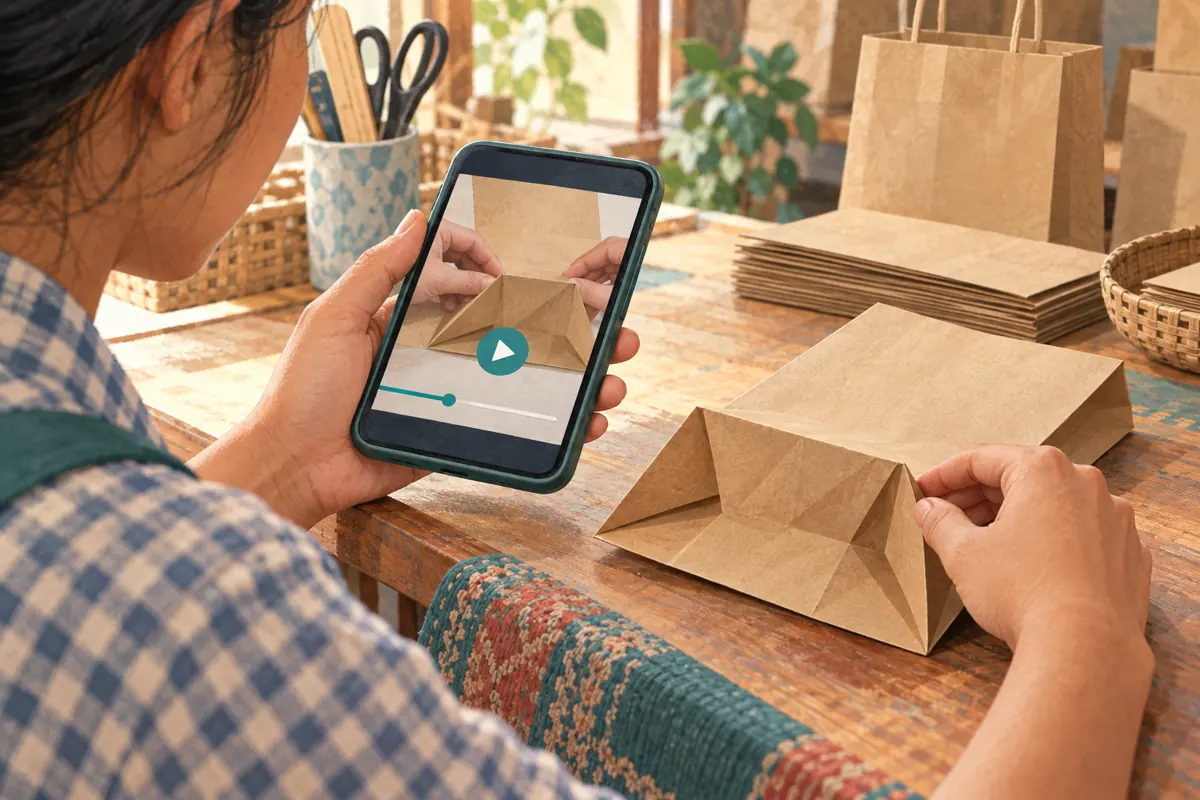
Choose evidence that matches the question you are asking. To assess navigation, ask whether a learner found the intended step. To assess explanation quality, ask what remained unclear. To assess workshop demand, record actual enquiries about attendance and keep confirmed bookings in the booking record. These observations answer different questions and should retain their original meaning.
Telegram’s Channels FAQ says post view counts are approximate and include views from forwarded copies. The visible counter therefore cannot tell you how many people understood the base fold. Keep any panel delivery history separately labelled when reviewing the post. A hypothetical learner saying “I found the fold, but cannot see the overlap” provides a specific editing clue. It is still one person’s response, not proof that everyone has the same problem or that promotion produced a sale.
Correct the right problem when something changes
If a label names the wrong action, correct the label and retest it. If the time opens after the useful movement, move the reference earlier. If the demonstration itself is unclear, improve the footage. These are different repairs; repeatedly changing captions cannot reveal a crease hidden behind someone’s hand.
When creating a revised video, rebuild the timestamp list against that version and review the references used in your promotional messages. Keep a simple internal note identifying the current tutorial and the date it was checked. If an SMM request already references the older post, consult the applicable terms or support before assuming it can follow a replacement. Avoid attaching a new video’s timestamps to an old recording merely because both demonstrate the same bag.
Avoid shortcuts that create more work
Common mistakes include copying another video’s times, labelling several moments “fold here,” opening a reference after the explanation has finished and crowding the caption with booking details before the index. Another mistake is treating every repeat question as evidence that the learner did not watch. The camera angle, terminology or chosen starting point may be the real obstacle.
Assign one person to approve the final recording and navigation before promotion. Have another person perform the learner test if possible. If a clip contains only one short action, a clear caption may be enough; timestamps are useful when there is a meaningful choice of starting points. Spend effort on the difficult movement first, then on distributing the guide. A larger visible engagement count cannot make an ambiguous fold easier to follow.

Frequently asked questions
Should every paper-bag video have timestamps?
No. A short clip showing one movement may need only a precise caption. Add timestamps when viewers reasonably need to return to different explanations within one recording. If the video mixes unrelated projects, separating those projects may help more than adding a long index.
Can the timestamp labels be written in Khmer?
Use Khmer labels when that is the language your learners understand, while keeping a conventional time format such as 2:14. Test the resulting caption in Telegram. Ask a fluent reviewer to confirm that the folding terms describe the visible action rather than translating an English label word for word.
Does a timed video link give people access to a private channel?
Do not treat a playback reference as an invitation or access grant. Telegram distinguishes public channels from private channels that require joining through the appropriate access route. Test the tutorial with someone who has the intended access, and resolve joining instructions separately from the timestamp.
What if the timestamp does not open the expected moment?
Check the time format, the recording’s duration and whether you are working with the correct video. For a reply, confirm that it directly references that video. Test again in the current app. Until the route works reliably, give a plain-language description of where the action appears.
Can purchased reactions show that learners liked the lesson?
No. Purchased reactions cannot establish satisfaction, understanding or attendance intent. Keep their delivery records distinct from voluntary feedback. To improve the lesson, ask a specific question about the difficult step and review the answers in context; to assess demand, use actual enquiries and booking records.
Explore the current service catalogue, create an account, or ask a specific question through support tickets.
- Telegram: Silent Messages, Slow Mode, Admin Titles and More — Timestamps and Improved Scrubbing
- Telegram: AI-Powered Sticker Search, Improved Videos and More — Copy Video Link at Current Time
- Telegram Channels FAQ — Access, Promotion and View Counters
Prepared with AI assistance. Illustrations explain the workflow and do not represent customer results.