20/10/2026 06:48
What Comes After the Wheel Demo? YouTube End Screens for Cambodian Luggage-Repair Shops
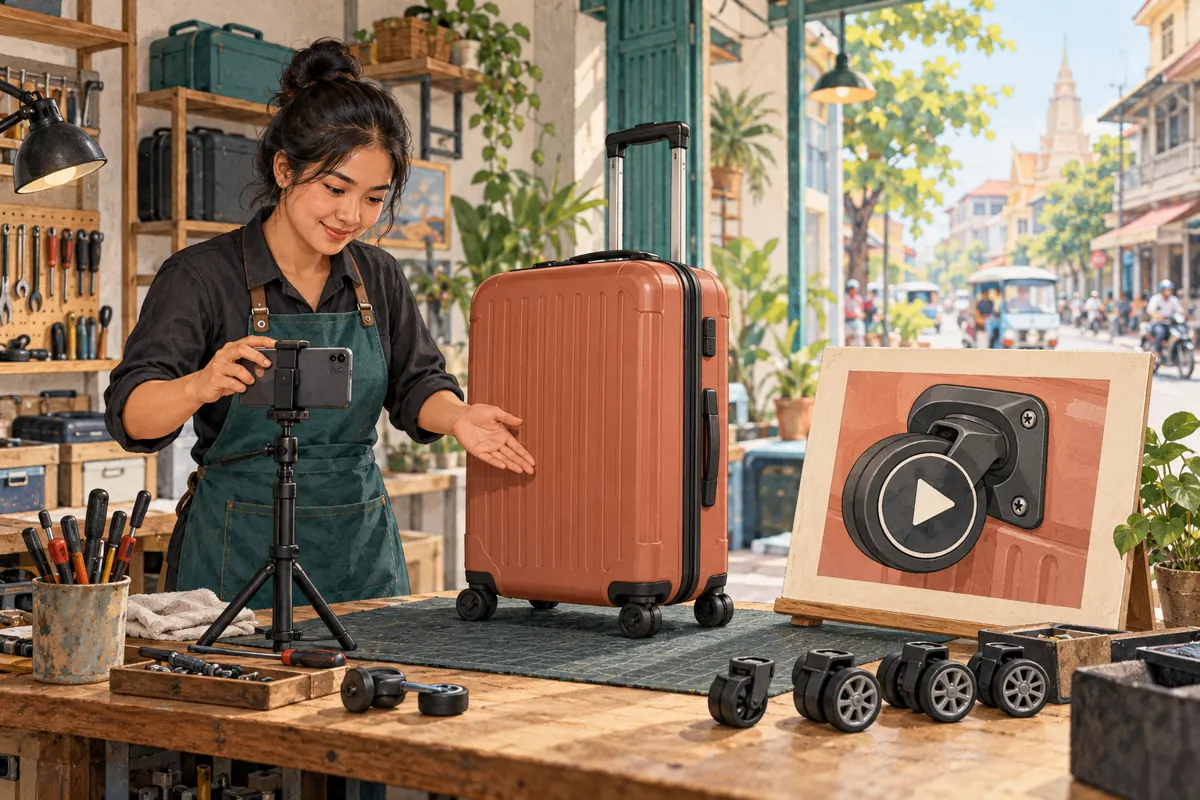
A suitcase-wheel demonstration can answer one question and leave another unresolved. Viewers may understand that a wheel can be replaced without knowing which photographs a repair shop needs before discussing compatibility. For a Cambodian luggage-repair business, that gap is a useful place to improve social media promotion. A relevant follow-up guide can help someone prepare an enquiry instead of leaving them to search through unrelated uploads. This article uses a hypothetical Phnom Penh workshop to explain how to plan, configure and review a YouTube end screen. It also explains why an SMM panel listing cannot establish that viewers followed the guide, live in Cambodia or intend to book a repair.
1. Choose the question that remains after the demonstration
Begin with the viewer’s unfinished task. In our hypothetical workshop, the first video shows a technician replacing a damaged suitcase wheel. Its purpose is to explain the repair process, not to establish that every suitcase accepts the same replacement. The logical next question is: what should I photograph so the shop can assess my wheel assembly? That gives the ending a practical job.
Write that question on the production brief before selecting another video. Avoid choosing the newest upload merely because it is available. A colourful luggage display may look attractive while doing little to resolve uncertainty about a broken mounting plate. Ask a colleague to finish this sentence: after watching the demonstration, the customer still needs to understand this. If the answer contains several unrelated tasks, choose the most immediate one and keep the others for separate guides.
2. Prepare the destination before designing the ending
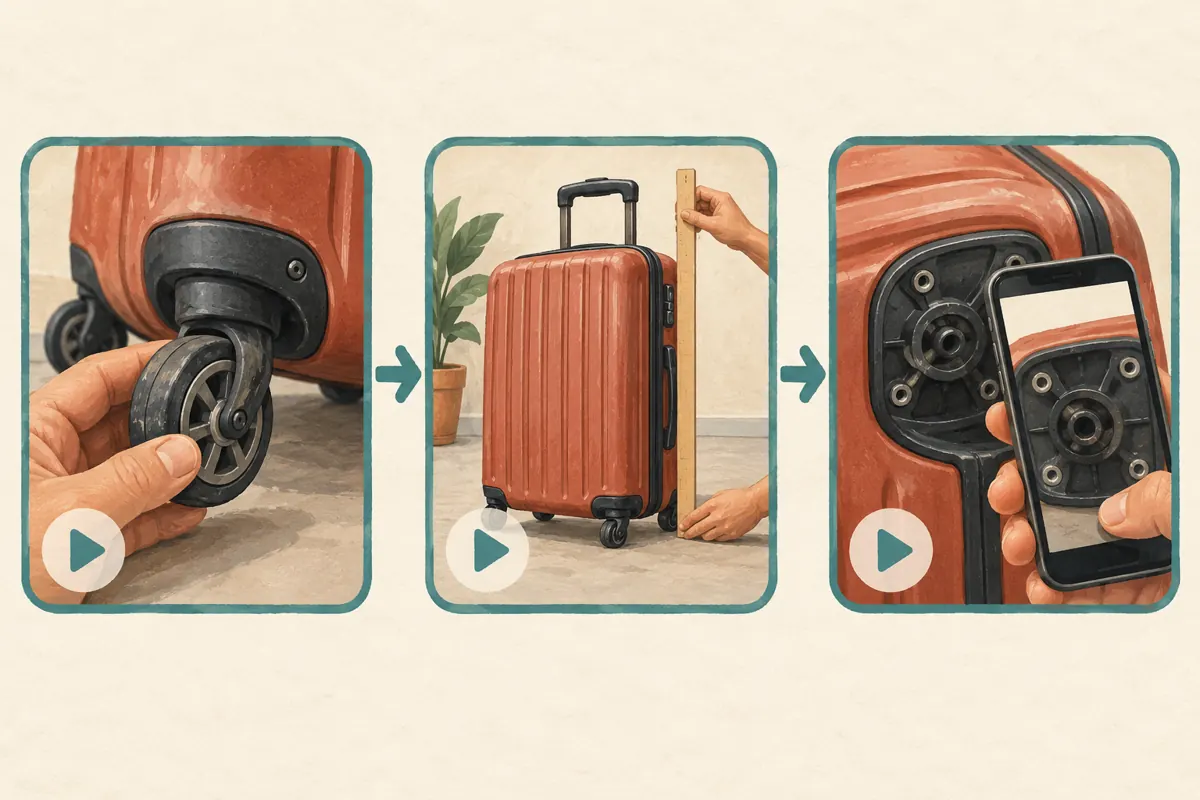
For this hypothetical campaign, create a follow-up guide showing the photographs needed for an initial repair enquiry. Demonstrate a whole-suitcase view, the damaged wheel and the visible mounting area. Use a shop-owned sample with identifying luggage tags removed. Explain that photographs support an initial assessment; staff may still need to inspect the suitcase before confirming a suitable part or repair.
Make the guide useful for the customers the workshop actually serves. If enquiries usually arrive in Khmer, prepare Khmer narration and have a fluent colleague check the wording. Keep technical terms consistent between both videos. A viewer should not have to guess whether wheel base, bracket and mounting plate mean the same component. Show what a usable photograph includes, alongside a deliberately incomplete example, without implying that customers must dismantle anything. The destination should resolve the promised question before asking for another action.
3. Check whether the feature fits the video
YouTube’s official guidance says end screens occupy the final 5–20 seconds and require a video at least 25 seconds long. They are unavailable on content designated made for kids, and viewers can hide them. Treat these as feature constraints, not reasons to change an accurate audience designation. The exact supporting Help page appears in the sources.
For the workshop, use an ordinary demonstration with a deliberate closing passage. The main lesson must remain complete even when the viewer does not see an end screen. Include a spoken reference to the follow-up guide by its recognisable title and place an ordinary video link in the description as a practical fallback. Do not make the closing tile the only route to essential information. Someone who stops after the wheel demonstration should still understand its limits, including that similar-looking wheels may require different fittings.
4. Film a closing passage with room to choose
Finish the important demonstration before the invitation begins. In the hypothetical workshop video, the technician completes the final visual inspection, puts the suitcase upright and then introduces the photo guide. A suitable closing sentence would be: if you want us to assess your damaged wheel, watch our guide to the photographs we need. This connects the invitation to a real task without promising a quote or repair outcome.
Plan a quiet composition for that sentence. Keep the suitcase visible and reserve an uncluttered area for the next-video element. Do not place essential detail, a compatibility warning or a hand movement beneath the intended tile. During editing, watch the ending without sound and then listen without watching. The picture should make the transition understandable, while the spoken wording should explain why the follow-up matters. Avoid extending the ending with empty footage just to display more promotional choices.
5. Configure a specific destination and verify it
In YouTube Studio, select Content, open the video, then choose Editor and End screen. Add a Video element and select the intended guide. Adjust its placement and timing, preview the ending, then save. YouTube also offers most-recent-upload and best-for-viewer options; choose a specific video when the spoken invitation names one particular lesson.
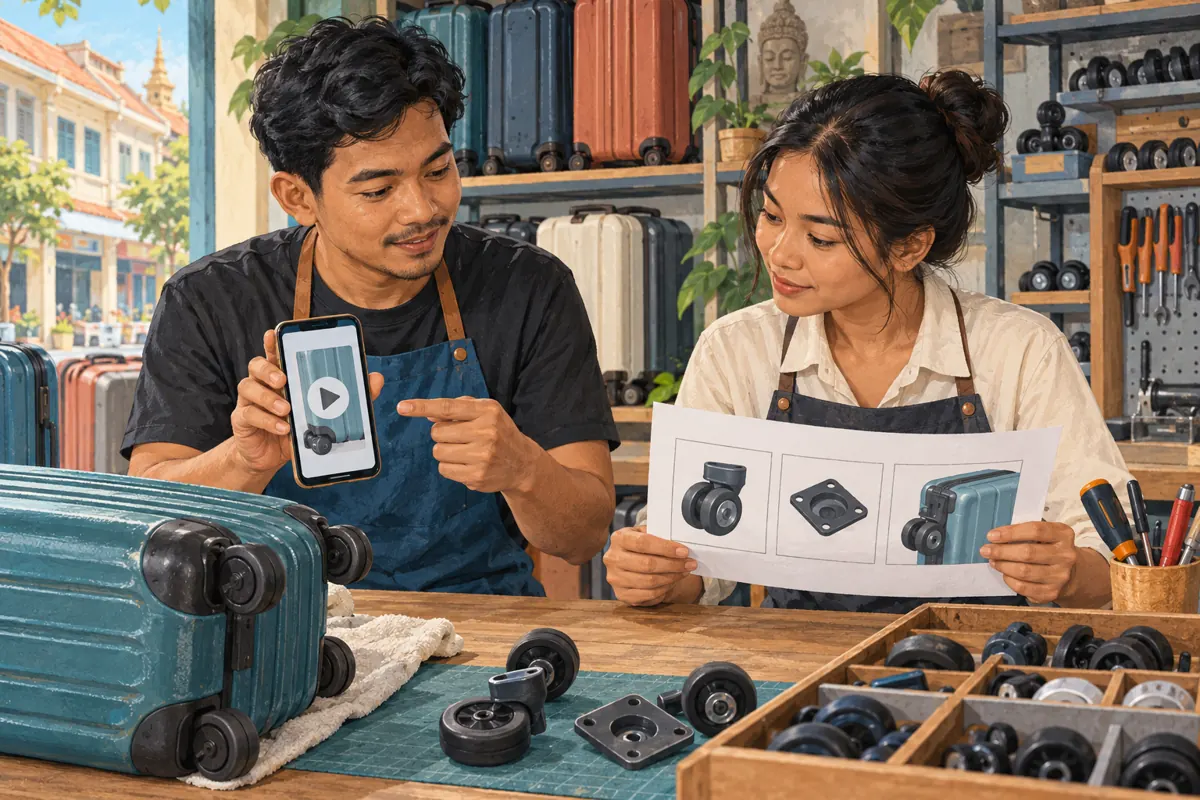
Check the destination by its subject and actual content, not only its thumbnail. A workshop may have several similar uploads showing black replacement wheels. Open the selected guide and confirm that its opening demonstrates the requested photo angles. Record the source video and destination together in the campaign brief. This small pairing makes later maintenance easier: if the guide is replaced, staff can identify which demonstrations still point to it. Assign one person to confirm the final saved pairing before the team shares the source video.
6. Test the journey as a customer would
Ask a colleague who did not edit the video to follow the journey on a phone. Give them a task rather than instructions about where to tap: find out which photographs the workshop needs to assess a damaged wheel. Observe whether they recognise the invitation, identify the correct guide and understand its request. This is a usability check, not a test of purchasing intent.
Repeat the check from the public link the shop plans to share. YouTube notes that end-screen presentation can vary with viewing context, so verify the description link as well. Pay attention to ordinary sources of confusion: an ambiguous thumbnail, unfamiliar terminology, an introduction that delays the promised answer or outdated contact instructions. Record each issue as a specific correction. Replace notes such as make it clearer with observations such as the guide never shows the underside angle mentioned in the first video.
7. Apply a policy check before considering panel services
The supplied top-smm.com catalogue includes the exact listing “YouTube Like ~ Max 100k ~ 50k/days ~ Instant ~ 𝐍𝐎 𝗥𝗘𝗙𝗜𝗟𝗟”. Its title labels it as a YouTube-like service, but the supplied description is empty. The title’s quantity, speed and refill wording should not be treated as independently verified performance. Nothing in that reference establishes Cambodian audience delivery, genuine customer interest or a connection to the follow-up guide.
YouTube prohibits artificial increases in engagement metrics and warns that a hired promoter’s methods can affect the channel. Accordingly, do not use purchased engagement to test this workflow or proceed with methods that violate the platform’s rules. A catalogue entry is not evidence of platform approval. Ask what work is actually being provided and evaluate it before any order decision. Keep the editorial task concrete: improve the explanation, connect the right guide and share useful content through appropriate business channels. Do not assume the panel offers editing or advertising services absent supporting information.
8. Separate navigation evidence from repair enquiries
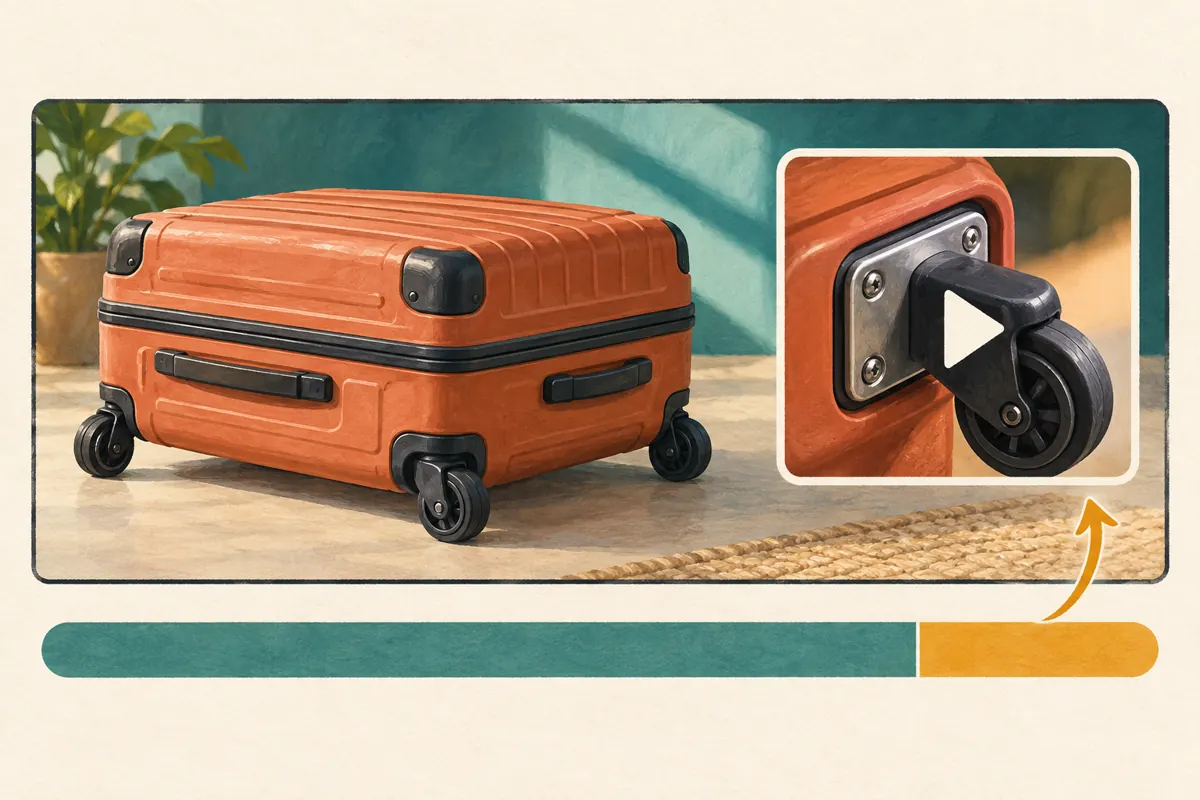
YouTube provides an End screen element click rate card under a video’s Analytics and Engagement area. Use that information to examine navigation, not to declare commercial success. A person can open a photo guide out of curiosity, for another repairer or for a suitcase they never bring to the shop. A click alone cannot answer those questions.
Maintain a separate, minimal enquiry record. Useful fields include the repair issue, whether the requested photographs arrived and whether staff needed to request another angle. If a customer volunteers that the guide helped, record it as that customer’s feedback. Do not generalise it into a claim about everyone who watched. Purchased engagement is not evidence of genuine interest, sales, ad delivery or Cambodian users. If any third-party promotion has occurred, keep its records separate and avoid attributing changes in enquiries to it without supporting evidence.
9. Fix the specific obstacle before broadening promotion
Review the whole journey when a problem appears. If colleagues cannot identify the next guide, revise its title or thumbnail. If they reach the guide but still photograph the wrong component, improve the demonstration. If they understand the request but cannot find a current contact method, repair the enquiry instructions. These are different problems and should not receive the same response.
Change one meaningful component at a time when practical, and note what changed. For example, the hypothetical workshop might replace a distant suitcase thumbnail with a clear mounting-area close-up while keeping the destination video unchanged. This gives the team a more understandable review than simultaneously changing the ending, guide, contact method and promotional message. Small amounts of viewing activity may not support a confident comparison. When evidence is thin, describe the result as inconclusive and continue collecting ordinary feedback rather than manufacturing certainty.
10. Avoid endings that create new confusion
Common mistakes include covering the final repair detail, naming one guide while linking another, and offering several unrelated next steps. Another is presenting a demonstration as proof that the workshop can repair every suitcase model. Make the invitation narrow enough to honour: the follow-up explains the information needed for assessment. It does not establish part availability, a final price or a completion date.
Give the journey an owner after publication. Review it when the workshop changes its enquiry process, replaces a guide or stops handling a particular repair type. Keep temporary offers out of an evergreen closing passage where possible. If the original video shows an outdated process, decide whether correcting the destination is sufficient or whether the source itself needs revision. Promotion should follow a usable explanation. A polished ending cannot compensate for instructions that staff no longer follow.
Frequently asked questions
Should the ending ask viewers to subscribe or watch the photo guide?
For this scenario, prioritise the photo guide because it resolves the immediate question raised by the wheel demonstration. A subscription request serves a different purpose. Choose the action that best supports the lesson rather than filling every available space. Review whether a first-time viewer can explain the next step after seeing the ending once.
What if the workshop has no suitable follow-up video?
Do not direct viewers to an unrelated upload just to complete the layout. Prepare a concise guide using a shop-owned sample, or give the necessary enquiry instructions clearly in the source video and its description. Add the follow-up route when the destination is accurate and useful. Production readiness matters more than having an extra clickable element.
Can a rise in likes show that the end screen works?
No. Likes do not establish whether viewers reached the ending, selected the destination or understood the photo instructions. Examine navigation information alongside direct usability observations. Then assess enquiry quality separately. Even genuine appreciation for a demonstration is different from a request for a repair, and purchased engagement cannot bridge that evidential gap.
How should the shop handle customers outside Phnom Penh?
State the workshop’s actual assessment and service arrangements in the enquiry instructions. Ask for the customer’s location only when it is needed to explain available options. Do not imply nationwide collection or delivery unless the business provides it. A useful instructional video can reach people the workshop cannot practically serve, so viewing activity should never be treated as proof of serviceable local demand.
Explore the current service catalogue, create an account, or ask a specific question through support tickets.
Prepared with AI assistance. Illustrations explain the workflow and do not represent customer results.