22/10/2026 12:35
Doorway Size or Mat Size? Telegram Quote Replies for Cambodian Custom Floor-Mat Shops

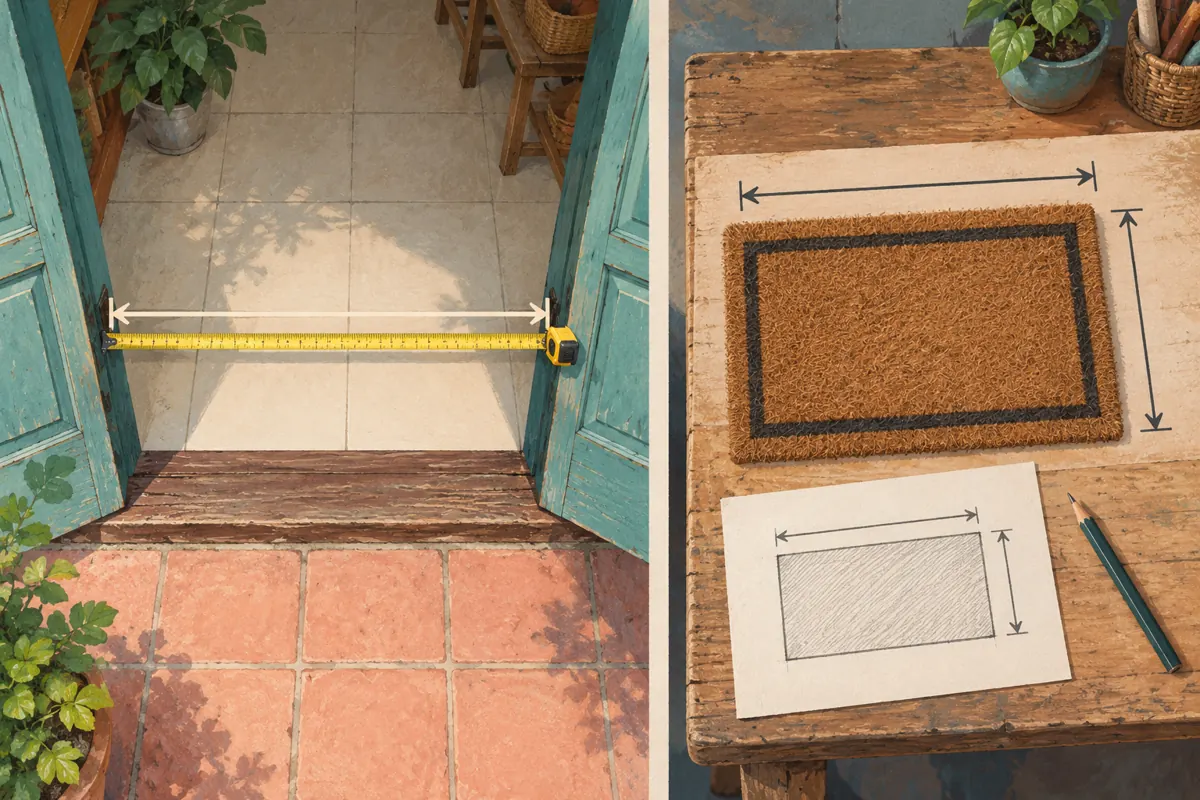
A customer sees a floor-mat demonstration, sends several measurements through Telegram and asks whether the shop can make something similar. The seller replies, “Yes, that size is fine.” But which size did the seller mean: the doorway opening, the existing mat or the customer’s proposed replacement? For Cambodian businesses selling custom mats through social media, that ambiguity can follow an enquiry all the way to the cutting table. Telegram quote replies can help staff identify the exact statement they are answering. The useful workflow connects a clear promotional post, a focused clarification and a final specification that the customer explicitly approves.
1. Give the promotional post one practical next step
Start with a post that helps someone prepare an enquiry. Show the mat material, its edge treatment and how the finished piece sits at an entrance. Explain whether the demonstration concerns a loose mat or a fitted piece. Avoid suggesting that every entrance needs the dimensions shown in the demonstration. A sample illustrates the product; the buyer’s entrance still needs its own assessment.
End with a specific request: send a photograph of the intended position, the width and depth with units, and whether those measurements describe the space or the finished mat. Ask customers to send private details through the shop’s stated enquiry route. For a Cambodian shop serving Khmer-speaking buyers, prepare this instruction in natural Khmer and check that the words for width, depth and finished size remain distinct.
2. Use a quote reply to identify the statement
Telegram supports replies quoting a selected portion of a message. Its documented mobile method is to tap the message, or hold it on iOS, select the relevant text and choose Quote. Tapping the resulting quote takes the reader to the referenced passage. Telegram also offers quote formatting for text, which is a separate writing feature. These functions are described in Telegram’s [official reply guide](https://telegram.org/blog/reply-revolution).
For workshop enquiries, select enough words to preserve meaning. Quoting only “90” loses the unit and what was measured. Quoting “the doorway opening is 90 cm wide” gives your reply a clear subject. Then ask one focused question beneath it: “Is that the opening measurement, or the finished width you want us to cut?” Test the selection and reply on the devices your staff actually use before making it part of the routine.
3. Separate the opening, existing mat and requested piece
Consider a hypothetical Phnom Penh shop enquiry: “The entrance is 90 cm wide. Our old mat is 80 by 50 cm. Can you make the brown one for Saturday?” This message contains a location measurement, a product measurement, a colour reference and a timing request. A single affirmative reply leaves several possible interpretations. Quote the opening statement first and establish what it describes.
Next, clarify whether the old mat’s dimensions are the requested finished dimensions or simply background information. Ask which direction each measurement runs, especially when a photograph is rotated. Have the buyer identify the brown material from a current sample. Treat the requested collection day as a separate availability question. These example measurements are hypothetical and are not sizing recommendations; the shop must assess the actual material, position and intended use.
4. Choose the reply method according to the uncertainty
Use a selected quote when one part of a longer message needs clarification. A normal reply is often sufficient when the entire message asks one clear question. If several details conflict, stop answering fragments and write a short recap of the unresolved points. This prevents the conversation from becoming a chain of technically precise replies that still lacks a shared conclusion.
Photographs and voice messages need their own handling. A quoted caption cannot establish an unlabeled measurement visible elsewhere in a picture. Ask for a clearer image or write what you believe the customer means and request confirmation. If a voice message contains dimensions, transcribe the relevant measurement as your understanding, with units, rather than presenting your transcription as an exact written statement from the customer. Do not infer scale from floor tiles or familiar objects.

5. Preserve meaning when changing language or shortening text
A busy shop may receive Khmer, English and mixed-language enquiries. Keep the customer’s original wording in the selected quote and place your explanation beneath it. If another employee needs a translation, label that translation as a working interpretation. Check measurement units, negation and timing words carefully. “Do not cut yet” must remain attached to the instruction even if the rest of the message is shortened.
Avoid quoting only the convenient part of a conditional statement. If a buyer writes, “Use the old size only if the border is included,” selecting only “Use the old size” changes the instruction. Preserve the condition and explain whether your proposed dimensions include the border. When a phrase remains unclear, ask the customer to describe the intended result or mark a sketch. A neat-looking quotation is useful only when it preserves the original meaning.
6. Move the discussion without exposing the customer
Some enquiries begin under a promotional post and continue privately. Telegram allows replies to be sent into another chat; access to the original message still depends on the recipient’s access rights. That behaviour is documented in the [official reply guide](https://telegram.org/blog/reply-revolution). Before using it for a handover, check the destination and consider whether the new reader needs the quoted information.
A public answer can explain the general difference between doorway dimensions and finished mat dimensions. The customer’s address, entrance photograph and delivery arrangements belong in the appropriate private conversation. When preparing educational content from a recurring question, create a clearly hypothetical example instead of publishing a customer’s exchange. For internal handovers, share only the details the colleague needs to resolve the measurement or prepare the order.
7. Finish with a specification that can stand alone
Once the questions are resolved, write a complete proposed specification in one message. Include the chosen material reference, finished width and depth with units, orientation where relevant, quantity, edge treatment and any agreed collection or delivery arrangement. State whether the dimensions include the border. Add the price and timing only after the shop has checked them. Ask the customer to confirm this whole specification before the shop’s cutting approval step.
Do not ask the person cutting the mat to reconstruct the instruction from scattered quotes. Give them the confirmed specification and a clear record of the customer’s response. If a measurement changes afterward, issue a new complete specification and identify the earlier one as superseded. An acknowledgement such as “thanks” may simply close the conversation; where its meaning is unclear, request explicit confirmation rather than treating it as approval to cut.
8. Place SMM-panel activity outside the approval process
For readers reviewing top-smm.com, the supplied catalogue includes the exact public name “Telegram - Views ~ 1 POST ~ INSTANT”. The name labels a views offering associated with one post, but its description is empty. The brief therefore provides no basis for verifying delivery timing, audience location, account characteristics or business outcomes. Treat wording in the title as catalogue wording, not independently established performance.
Before considering any panel service, make sure the promotional post and enquiry workflow are useful on their own. Check the current service terms and applicable platform rules, and keep any service record separate from customer orders. Purchased engagement is not evidence of genuine interest, sales, ad delivery or Cambodian users. It cannot tell you whether a buyer understood a measurement, and no view count should authorize a cut or substitute for a customer’s confirmation.
9. Review the questions, not just the counter
Telegram explains that channel view counts are approximate and include views of forwarded copies. They therefore should not be read as a list of distinct prospective buyers. See the [official Channels FAQ](https://telegram.org/faq_channels). For this workflow, the more useful review is whether actual enquiries arrive with enough information to progress toward a specification.
Keep a small operational log of recurring uncertainties: missing units, unclear orientation, confusion about borders or an unidentified material sample. Record the clarification needed and whether it was resolved, without copying unnecessary personal details. If several genuine conversations reveal the same misunderstanding, improve the demonstration or enquiry instruction. For example, add a close-up showing where the finished edge begins. Do not claim that the change improved sales unless your own records support that conclusion.
10. Catch the mistakes that survive a precise reply
The most common failure is treating a precise reference as a complete agreement. A seller may correctly quote the width while leaving depth, material and border treatment unresolved. Another mistake is answering an older measurement after the customer has supplied a correction. Before sending an important reply, read the surrounding conversation and check for later changes. The selected sentence should be relevant to the current decision.
Also watch for mismatched photos, copied replies from another enquiry and silent unit conversions. Read back the final dimensions in the same unit used in the specification. Before expanding promotion, run a hypothetical enquiry through the whole process with a colleague: an ambiguous message, a clarification, a changed measurement and a final confirmation. The exercise succeeds when the colleague preparing the work can identify the approved piece without guessing or searching through unrelated messages.

Frequently asked questions
Should staff quote every customer message?
No. Use a quote when it removes uncertainty about which statement you are answering. Quoting every short message adds clutter and can make the final decision harder to find. When the enquiry contains several unresolved details, a concise recap followed by a complete specification is usually more useful than many separate replies.
What if the customer sends two different widths?
Identify both measurements and ask which one describes the requested finished piece. Do not automatically choose the latest number if its meaning is unclear; it might describe another entrance or the available space. Once the customer explains the difference, write the complete revised specification and obtain confirmation before work proceeds.
Can a quote reply prove that a customer approved the order?
A quote identifies the statement being discussed. The shop still needs a clear response to its complete proposed specification. Keep the operational distinction between asking a question, acknowledging an answer and approving production. If the reply could reasonably mean more than one thing, resolve that ambiguity before cutting.
Can the shop reuse this workflow in a promotional demonstration?
Yes. Create a fictional enquiry with clearly hypothetical dimensions and show how the shop clarifies it. Explain the decision process without displaying a real customer’s private chat. Keep the demonstration focused on how to request a mat, and avoid presenting the staged conversation as a testimonial or evidence of customer demand.
Do more Telegram views mean the enquiry process is working?
Views alone cannot answer that question. Review whether actual customers provide identifiable materials, meaningful dimensions and clear confirmation. If panel activity is involved, document it separately so that purchased engagement is not presented as customer interest. A useful process is one your team can follow accurately even when the public counter supplies no actionable information.
Explore the current service catalogue, create an account, or ask a specific question through support tickets.
Prepared with AI assistance. Illustrations explain the workflow and do not represent customer results.